Water standing in the lot or the common area?
Ponding at a storefront, a flooded entry median or a soggy greenbelt behind the pool starts the same way a yard problem does: water with no working path out. What changes is the scale, the traffic and who signs off.
Clay Plano Drainage Company handles commercial drainage for HOA common areas and retail and office lots in Plano and nearby cities. We scope the job, coordinate the engineering and permits it needs, and manage the work around the people using the site.
What happens on the first visit
We walk the site with whoever fields the complaints: the property manager, the HOA board’s contact or the facilities lead. Photos and dates from past storms help separate recurring problems from one-off ones.
- Where water collects. Parking rows, entries, loading areas, sidewalks, amenity decks and greenbelts.
- The existing system. Curb inlets, area drains, trench drains, storm lines and any detention outlet, and whether each one flows.
- The paperwork. The plat, easements, any approved drainage or grading plan, and who the plat makes responsible for maintenance.
- Traffic and access. Fire lanes, deliveries, residents’ routes and business hours.
- What needs an engineer. Storm sewer tie-ins, work in the right-of-way, or grading across a larger area.
You get a written scope showing the phasing and what needs engineering or a permit before the bid is final.
HOA common areas
Common areas carry water from many lots at once. Entry medians, greenbelts, amenity centers and the swales behind rows of houses all take runoff from the homes around them.
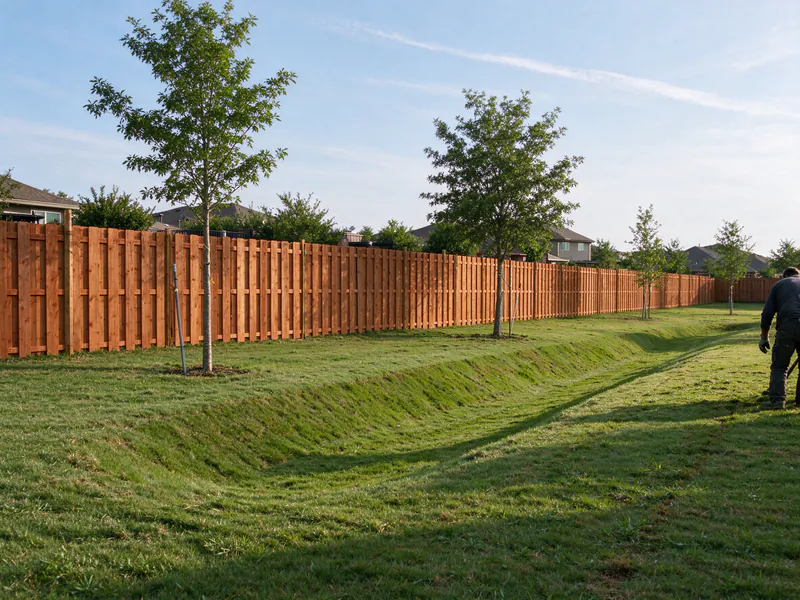
- Greenbelt swales that have silted up or been planted over.
- Pool decks and amenity patios that pond at the door or drain toward a building.
- Entry medians and islands where irrigation and runoff keep the turf soft.
- Easements behind homes where fences, beds or sheds now block the flow.
Who maintains what depends on the plat. In Plano, house drainage easements are privately maintained. In McKinney, the engineering manual puts private drainage on the lot owner, or on the HOA where the plat says so. The guide to drainage easements in Plano explains what an easement does and doesn’t change.
Retail and office lots
Paved lots move water fast. Every square foot of asphalt and roof sends its rain to the inlets, so a clogged or undersized inlet floods a row of parking in a hurry.
| Where it ponds | What usually fixes it |
|---|---|
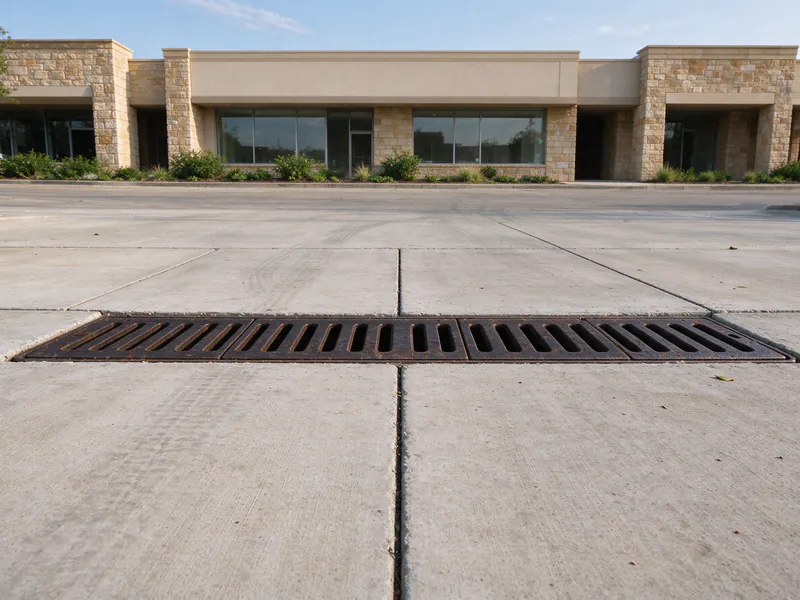
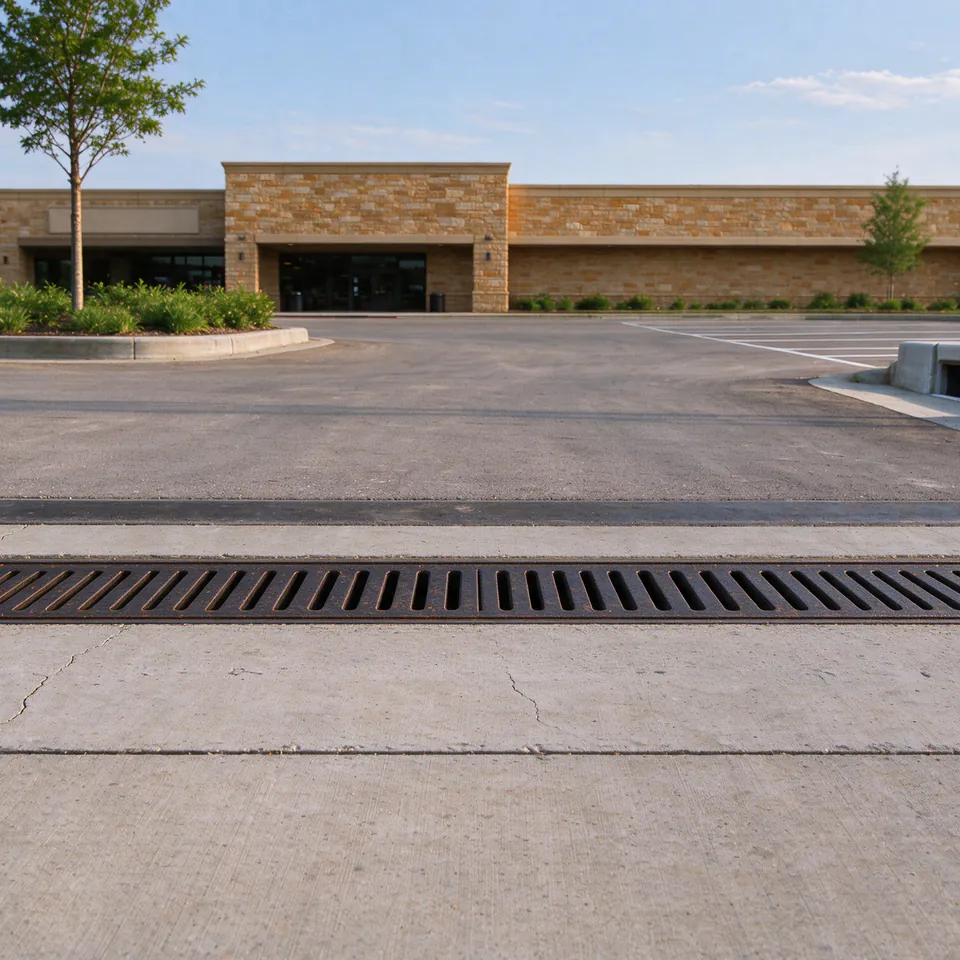
| Storefront walks and entries | A channel drain across the walk or drive, with a traffic-rated grate |
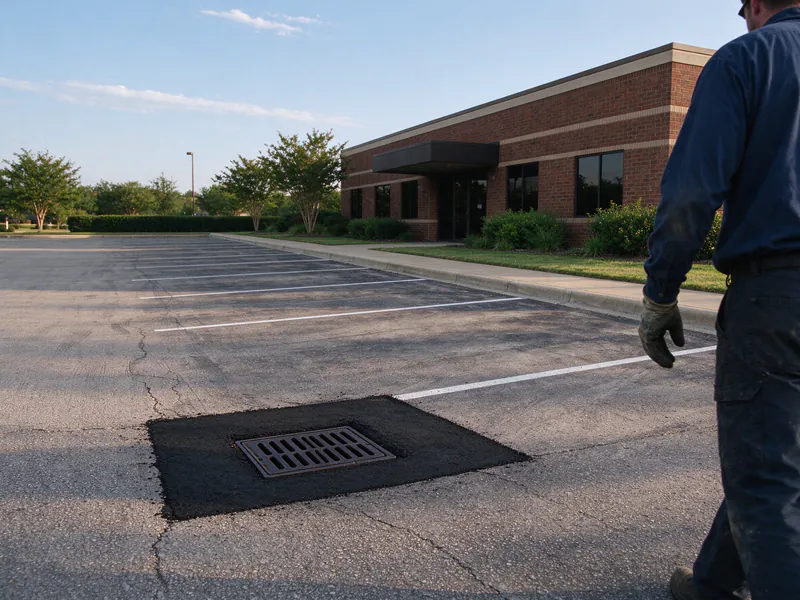
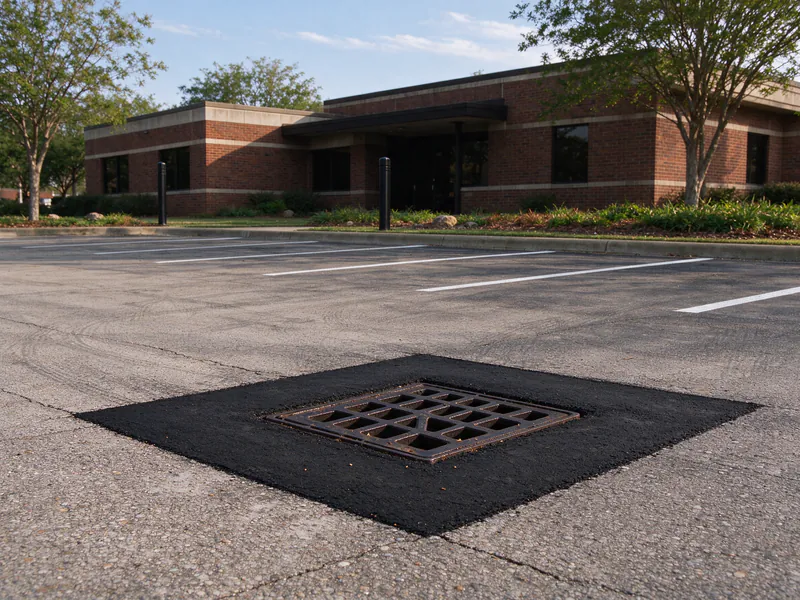
| Low spots in parking rows | A new inlet or a catch basin tied to the storm line, with the paving patched around it |
| Loading docks and ramps | A trench drain at the bottom of the ramp, sized to the paving above |
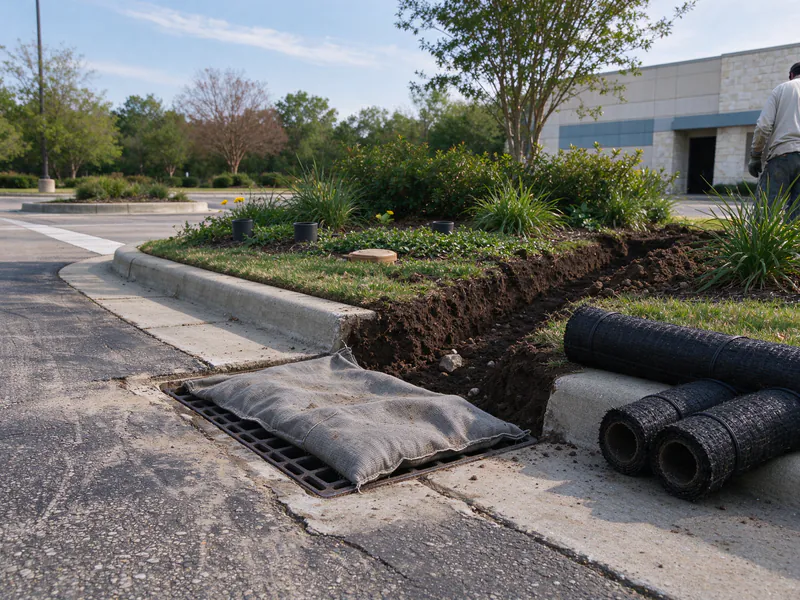
| Landscape islands | Regrading so the island stops shedding mud and water onto the curb line |
Grates and channels on a commercial lot carry cars and delivery trucks, so they’re rated for that load. A residential grate under a box truck cracks or shifts.
Engineering, permits and stormwater rules
Commercial drainage has more sign-offs than a home yard. Where the work ties into public storm drains, regrades a site or crosses the right-of-way, the plans and permits come first.
| What the job touches | What it needs |
|---|---|
| Plano right-of-way, curbs, drive approaches or storm drains | The city’s Engineering Permit for public infrastructure, kept on site once approved |
| Grading across a site | A grading plan under Plano’s Stormwater Design Manual |
| New detention or storm sewer design | A civil engineer’s stamped design |
| Open trenches near storm inlets | Construction runoff controls under the city’s MS4 permit |
| Garland right-of-way or easements | A permit with engineered plans |
Engineers size inlets and pipe for a chosen design storm. For central Plano, NOAA’s rainfall atlas puts a storm with a 10 percent chance in any year at about 2.52 inches in an hour. The engineer chooses the storm a site has to carry, and inlets, pipe and overflow routes follow from it.
Plano’s manual also says natural flow can’t be diverted or impounded in a way that damages adjacent or downstream property. Where the scope is design work, the engineer of record leads, and we manage the work to that plan.
Working around an open site
A commercial job happens around people who still need the site. The plan for that matters as much as the drainage.
- Phases. The work goes in sections, so part of the lot, the pool area or the entry stays usable.
- Fire lanes and accessible routes stay open, or get a marked detour the property agrees to.
- Noisy work such as saw-cutting gets scheduled with the property manager or board.
- Notice. An HOA can pass the schedule to residents before work reaches their area.
The guides to where yard drain water can go and Plano drainage rules cover the outlet and lot rules that apply to common areas too.
Keeping a commercial system working
Commercial drains clog the same way home drains do, only faster, because more paving sends more grit and litter to each inlet.
- Inlets and trench drains need clearing after the fall leaves drop and before the spring storms.
- Sweeping the lot keeps sand and debris out of the storm line in the first place.
- Clippings from landscape maintenance belong in bags, not blown into the curb line. Plano makes it illegal to dump debris into ditches and channels.
- Greenbelt swales need mowing and silt removal so they keep their shape.
A short maintenance list in the closeout walk tells the property manager or board what to check and when. Lines that keep backing up are a job for drain repair and cleaning.
How commercial drainage is priced
We scope and bid each commercial job, because no two sites share the same mix of engineering, paving and phasing. The written bid lists each part of the work, so a board or an owner can see what drives the total.
The biggest drivers:
- Engineered plans and city permits
- Traffic-rated inlets and channel
- Storm sewer tie-ins and right-of-way work
- Paving cut and replacement
- Phasing around occupants, traffic and open hours
- The volume of earthwork
Where a common area problem starts on the homes around it, the fix can include French drain or yard drainage work on those lots, scoped with each owner.