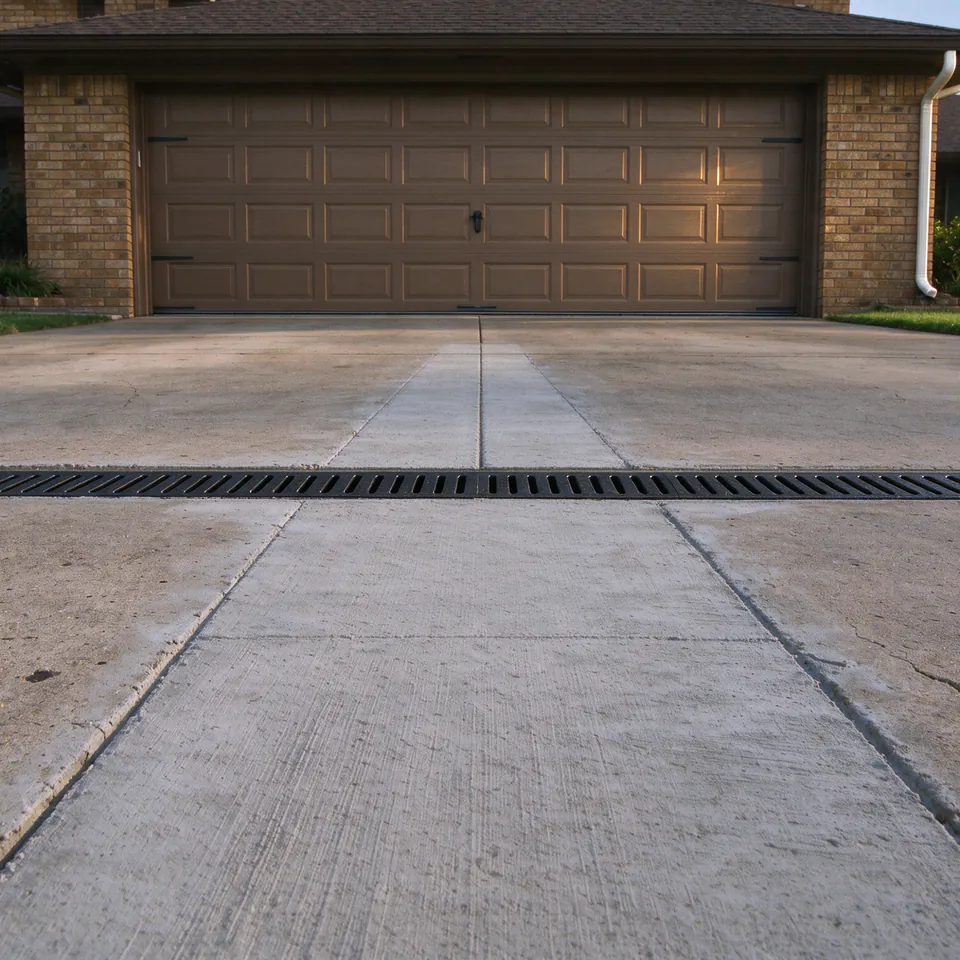
Water running down the driveway into the garage?
When a driveway or patio tilts toward the house, every storm sends a sheet of water across the concrete to the door. A channel drain cuts across that path and takes the water before it gets there.
Clay Plano Drainage Company installs channel drains at driveways, garage aprons and patios in Plano and nearby cities. We cut the concrete, set the channel, pipe it to a legal outlet and patch the slab to match.
What happens on the first visit
A channel drain is only as good as its height and its outlet, so we measure both before choosing a length or a grate.
- Where the sheet flow starts. The street, the drive approach, a roof valley above the garage, or the patio itself.
- Slab heights. Spot elevations across the apron or patio show the low line where a channel belongs.
- The garage floor. If it sits below the apron or the street, the outlet has to sit lower still.
- The outlet. Fall to an emitter in the lawn, an existing line, or the curb.
- The concrete. Joints, cracks and thickness at the edge, and where a cut would land.
You get a written estimate with the channel length, grate, outlet route and patch area.
Where a channel drain goes
Most home channels go in one of three places. Each one sets a different length, grate and outlet.
Across the driveway or garage apron
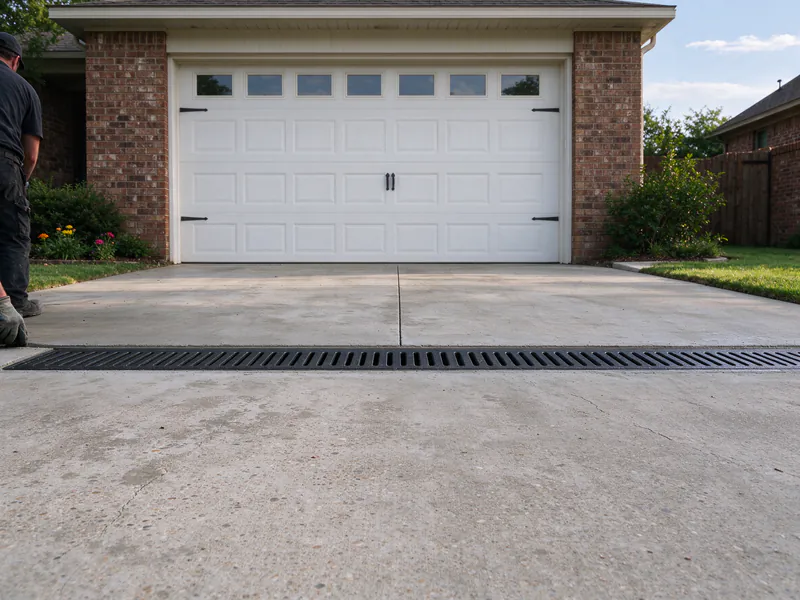
Across the drive near the garage door, catching water before it reaches the threshold. The grate takes car tires, and the channel sits in a concrete haunch so its edges don’t break under the load. A steep drive can need its channel a few feet out from the door, where the flow is still spread out.
Along the house edge of a patio
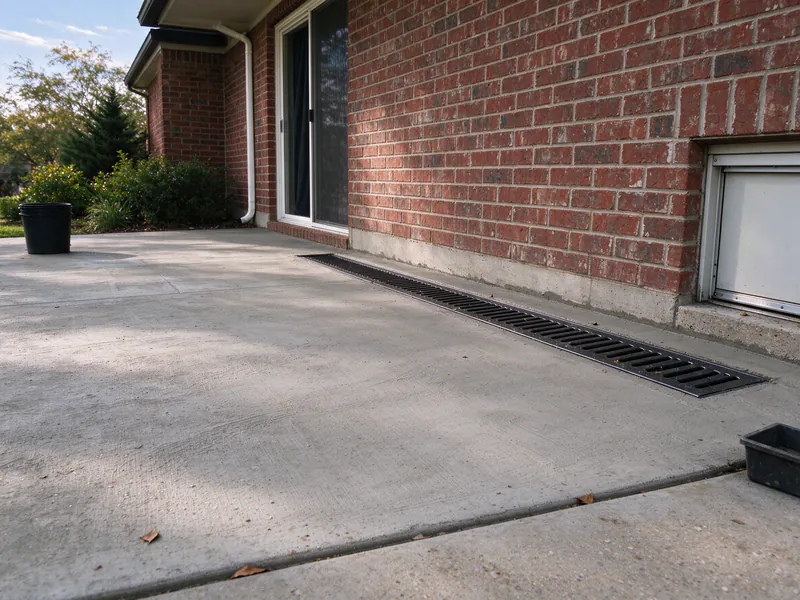
Patios settle, and one that tilts toward the slab sends rain to the back door. A channel along that edge catches it and carries it to the side, where it can head for the street. Foot-traffic grates work here, and slotted or decorative grates suit pavers.
Walks and courtyards boxed in by walls
Where a walk runs between the house and a wall or a raised bed, water has nowhere to go. A short channel at the low point, piped under the wall or along it, gives it an exit.
Picking the channel and grate
Channels differ in width, depth, material and how they get their slope. We match each one to the water it has to carry and what crosses it.
- Material. Polymer concrete channels are heavy and rigid and hold their line in a driveway. PVC channels are lighter and suit patios and walks.
- Slope. Some systems are made in sections that step down to the outlet. Others are flat and get laid on a slight fall.
- Outlet. An end outlet suits a shallow cut; a bottom outlet drops straight into the pipe below.
- Grate. Plastic for patios, galvanized steel or cast iron for drives. A slotted heel-proof grate suits a patio where people walk in dress shoes.
The estimate names the channel, the grate and why each fits.
Water from the street
Some driveway water starts in the street. When the gutter overflows in a big storm, water can climb the drive approach toward a garage that sits lower than the curb.
A channel at the garage handles what reaches the apron. The street, the curb and the drive approach belong to the city, and in Plano paving and drive approach work in the right-of-way needs the city’s Engineering Permit. Changes there are a permitted project, not a quick fix.
How the channel goes in
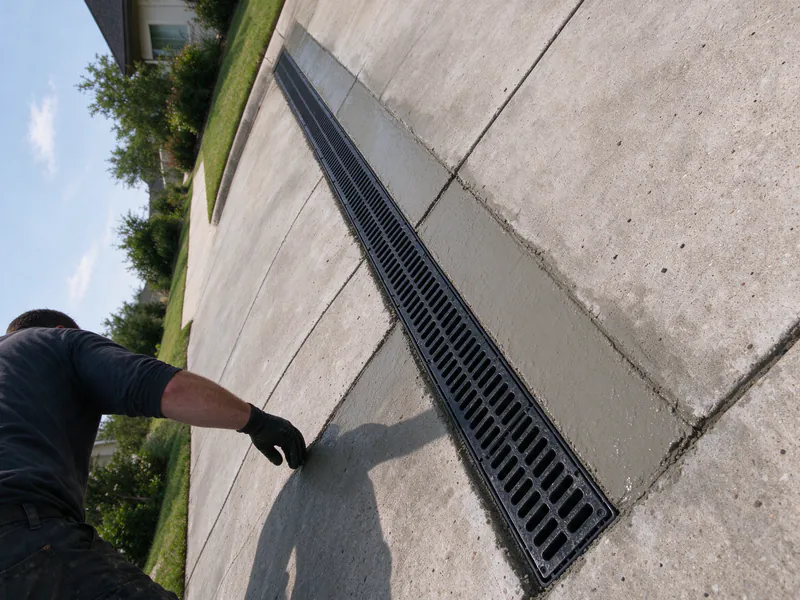
A channel drain is concrete work as much as drainage work. The cut, the support around the channel and the patch decide whether it stays flat and level with the drive.
- Locates and layout. Texas811 marks buried lines, and we snap the cut lines on the concrete.
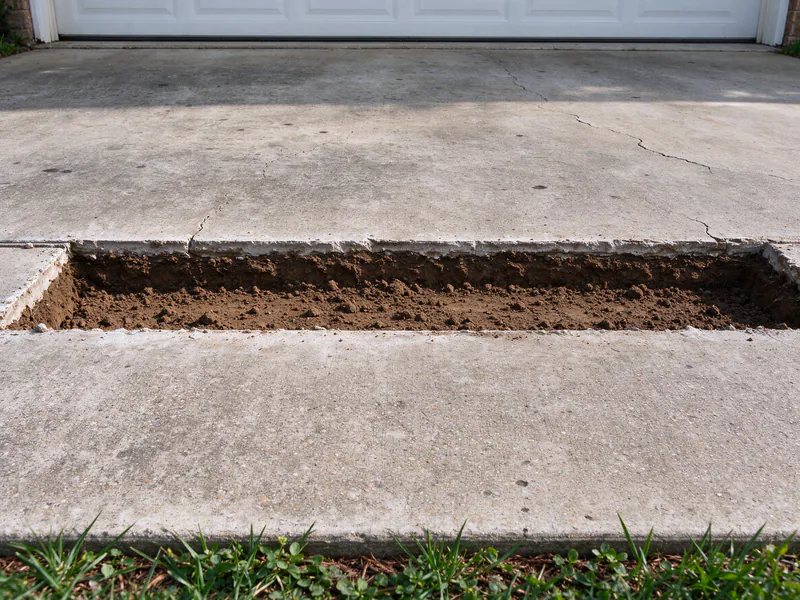
- Saw-cut. We cut straight, clean edges and remove the strip, following joints where they fall close.
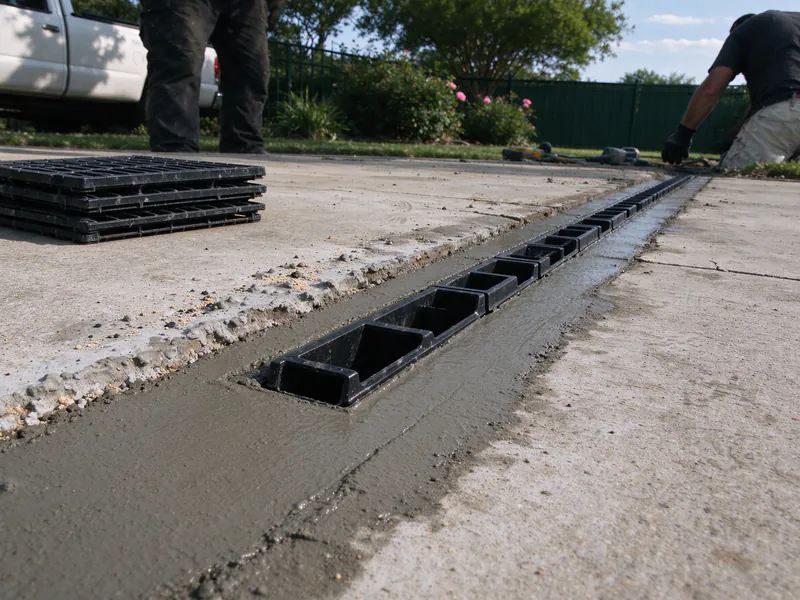
- Dig and set. We excavate below the channel, then set it to line and fall. Some channel systems step down section by section; flat sections get laid with fall.
- Haunch. Concrete goes in under and around the channel body, so the paving edges, not the channel, carry the load.
- Isolation joint. Where the channel runs beside the foundation, a joint keeps the new concrete from bonding to the slab.
- Outlet. Solid pipe leaves the end or bottom outlet at a steady fall to the emitter, line or curb.
- Patch and test. We finish the concrete to the surface around it, set the grates and run water across the paving.
Why the grate rating matters
Grates are rated for what crosses them. A patio grate under a car tire cracks or pops out, and a loose grate is a trip hazard. On driveways we use vehicle-rated grates, and locking grates where they could be kicked loose. Heavy cast-iron channel for truck traffic belongs to commercial drainage.
What a channel drain costs
Our typical range for a residential channel drain is $60 to $150 per foot. That includes the saw-cut, the channel and grate, the concrete patch and a solid line to an outlet; your written estimate sets the figure.
The area of concrete cut and patched moves it most, then the grate’s load rating, the length, the outlet run and whether it’s a drive, a patio or an apron. The channel drain cost guide breaks it down.
- Not sure a channel is the right tool? Channel drain vs French drain compares the two.
- If water pools at one corner instead of crossing the slab, a catch basin may do the job for less.
- Where the lawn beside the drive slopes back toward it, regrading stops that water before it reaches the paving.
Keeping a channel drain flowing
Grates catch leaves, grit and seed pods. Lift a section, rinse out the channel and flush the outlet line with a hose.
If the channel overflows even when it’s clean, the outlet is the likely limit, and a puddle beside the drive may be a separate standing water problem. The guide to where yard drain water can go covers outlets, and drain repair and cleaning finds blockages farther down the line.