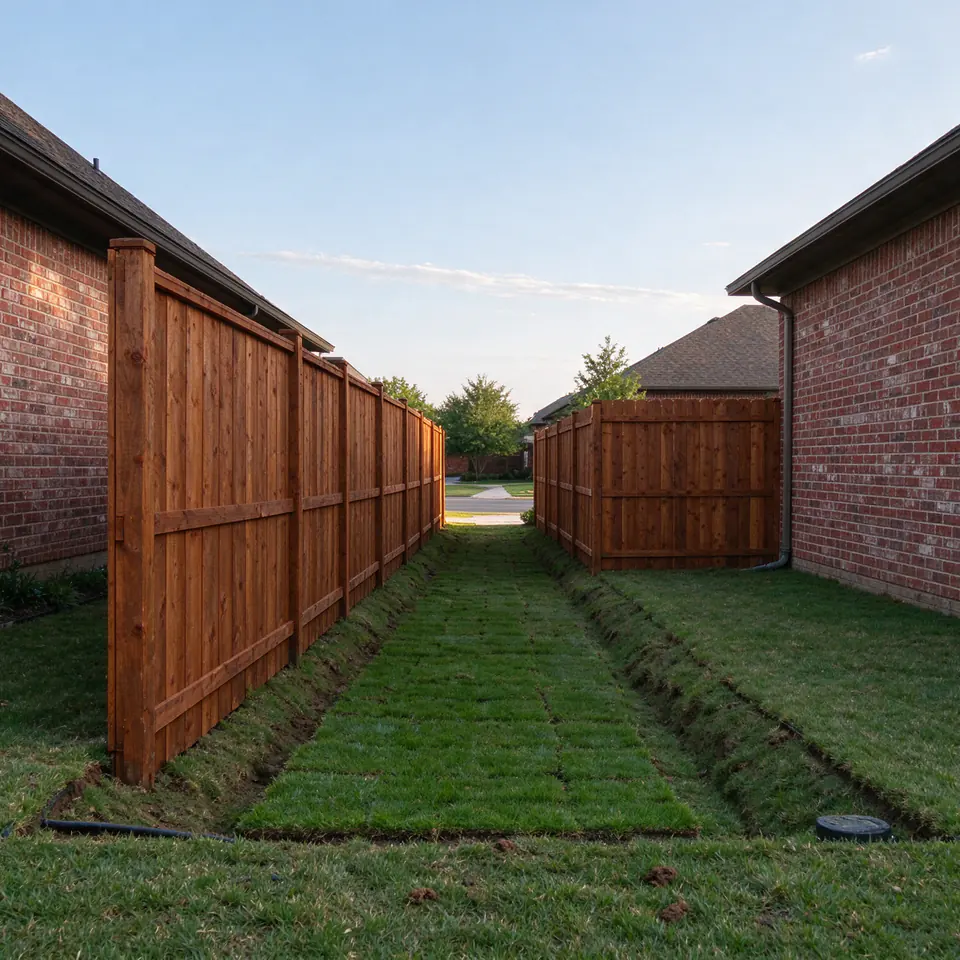
Water stuck between the houses?
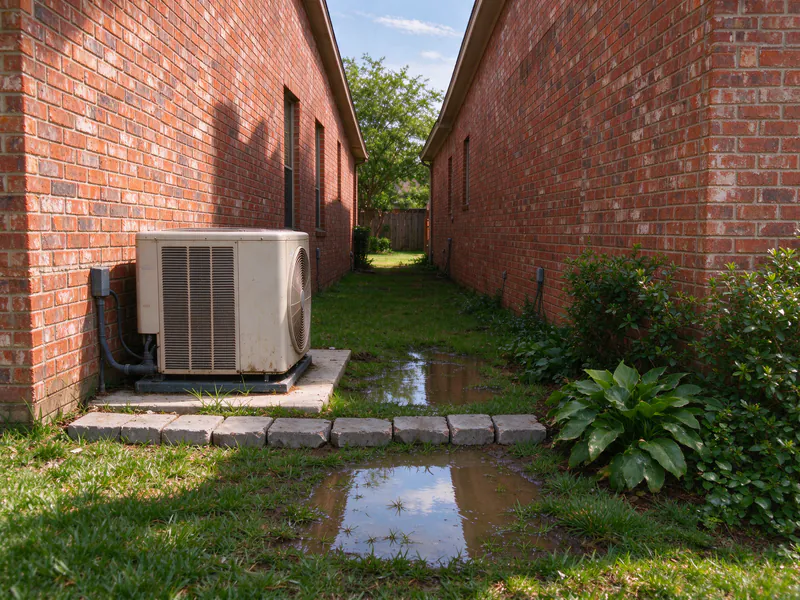
On many Plano lots, the strip between two houses is how the back yard gets rid of water. When it stops working, water backs up along the fence, the AC pad and the slab, then sits in the back yard.
Clay Plano Drainage Company restores side-yard drainage in Plano and nearby cities. We start with the shallow swale the lots were built with, find what’s blocking it, and add pipe only where the surface path can’t be brought back.
What happens on the first visit
We measure the side yard from the back corner to the street, because a side yard fails at its high point, not where the water sits.
- Depth and fall. The swale’s depth at the property line, and its fall along the full length.
- What’s in it. Fences, gates, the AC pad, slabs, edging, beds and anything stored along the wall.
- Both lots. The swale straddles the line, so we look at the neighbor’s half too.
- The plat. Whether a drainage easement runs down the side yard.
- Soil or surface. A probe tells us whether the ground stays wet under a dry surface.
The written estimate says whether your fix is reshaping, pipe, or both, and which side of the line each part sits on.
How a side yard is supposed to drain
Plano’s residential lot drainage detail draws a shallow swale centered on the property line. It is at least 0.25 feet deep, about three inches, and spreads across three feet on each side of the line.
Along its length the swale needs at least 1 percent slope, which works out to about six inches of fall over 50 feet. That isn’t much. A few seasons of mulch, sod laid over sod, or a slab edge can cancel it.
- Water from the back yard runs to the swale, then down it to the front.
- The swale carries water at the surface, with no pipe involved.
- A house drainage easement on the plat is privately maintained, which means by the owners, not the city.
The guide to drainage easements in Plano explains what the plat shows and how to read it.
What blocks a side swale
When a side yard stops draining, look first for something sitting in the swale that arrived after the house was built.
| What’s there | Why it stops water |
|---|---|
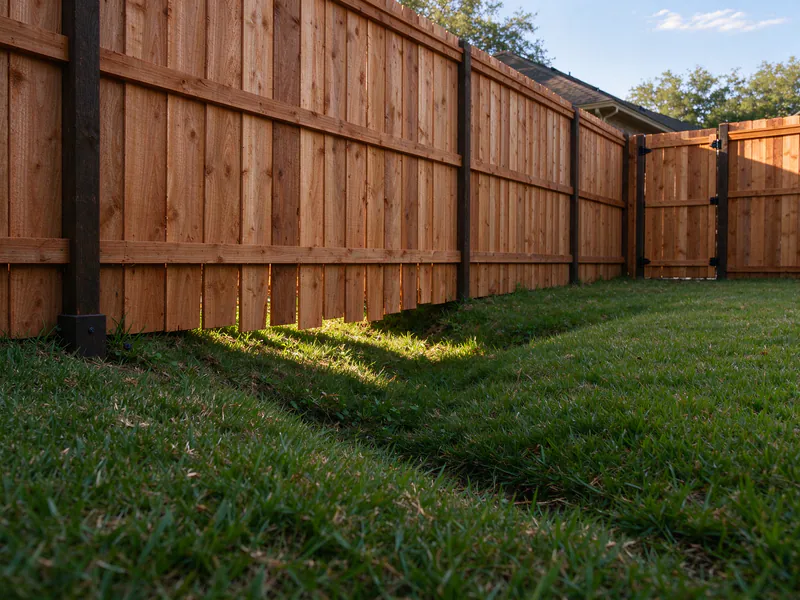
| A fence with a bottom rail or rot board at ground level | Acts as a low dam across the flow |
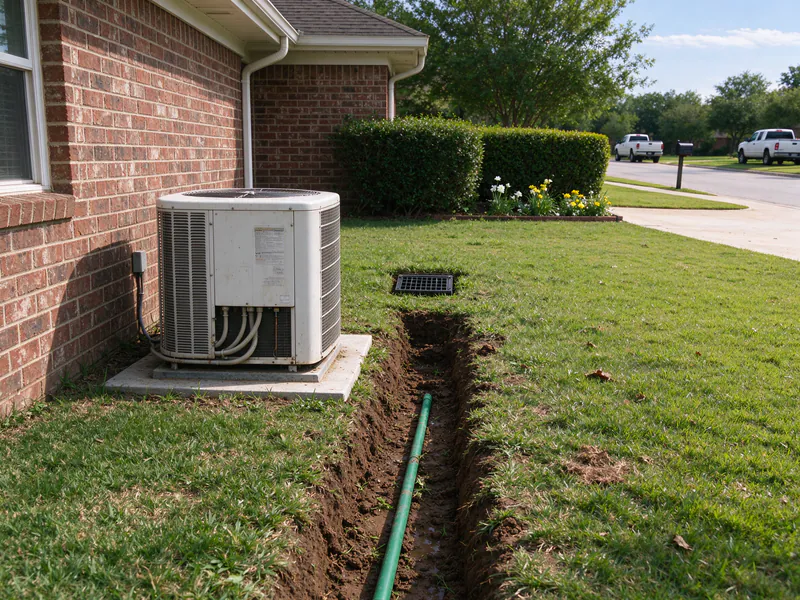
| An AC pad or pool equipment pad | Fills the low line of the swale |
| A patio or walk slab extended to the fence | Raises the grade and cuts the side off |
| Beds, edging and mulch | Build up a little every year |
| New sod laid on old sod | Raises the swale floor |
In Allen, the city’s lot drainage details let a slab reach no more than 1 foot into the side swale. Rowlett doesn’t allow pool equipment in drainage swales. Plano asks owners to check the plat before building fences, walls or decks, since improvements in an easement can be cited and removed.
Reshape, pipe or both
Reshaping comes first because it costs less and can’t clog. Pipe comes in when something permanent, like an AC pad or a slab, has to stay in the swale.
Reshaping the swale
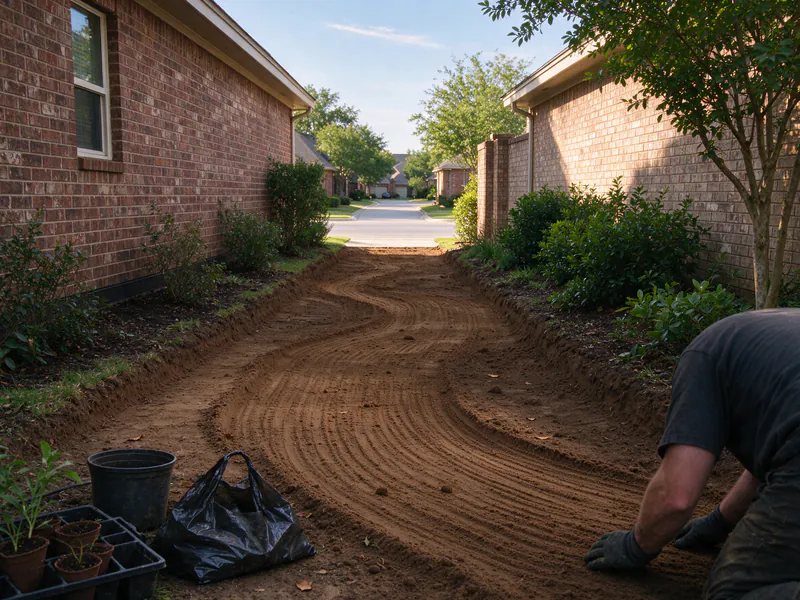
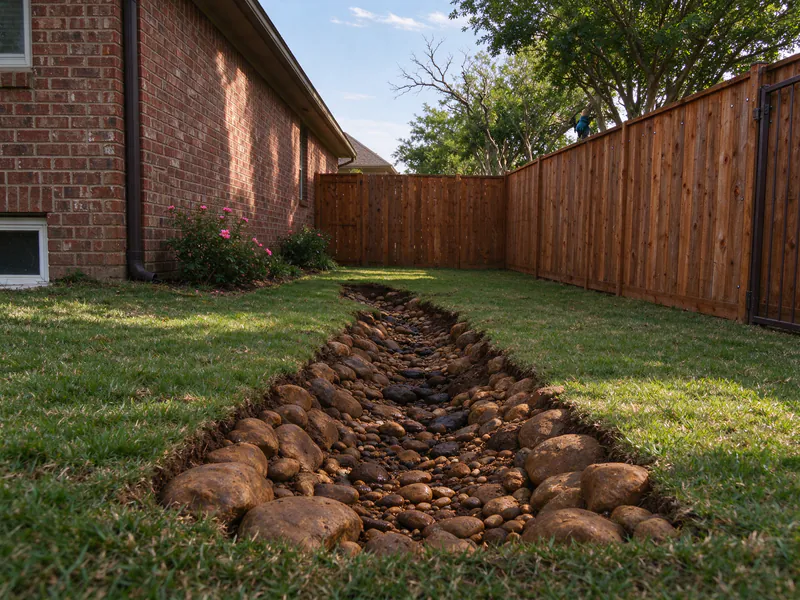
We cut the swale back to depth and fall, starting at the street end and working toward the back, then set sod or rock to hold it. Where a fence crosses, we open a gap at the bottom or raise the lowest board so water can pass.
Pipe with inlets
Where the swale can’t be cleared, a catch basin at the back corner and sometimes one partway along feed a solid line to the front. The surface still needs a path for storms bigger than the pipe, so we keep the swale as shaped as the space allows.
When the soil stays wet
If the probe finds water held in the ground long after rain, a short French drain section under the swale collects it. Downspouts that empty into the side yard usually get their own downspout lines so they stop loading the strip.
Working with the neighbor
Because the swale sits on the property line, half of it is usually on the next lot, and their back yard’s water comes down the same strip.
Plano doesn’t permit lot-to-lot drainage unless an engineer approves it. Texas Water Code section 11.086 bars diverting natural flow in a way that damages another property. We plan each fix so both lots keep draining toward the street. The guide to neighbor water runoff in Texas covers the rules when water crosses the line.
Keeping a side yard draining
A restored swale stays restored only if nothing moves back into it. The side yard is the easiest place on the lot to store things, and every item set in the swale is a small dam.
- Keep beds and edging out of the swale’s low line, and top up mulch without raising it.
- Store nothing along the fence in the swale: trash bins, firewood, pavers or a kayak rack all block flow.
- Keep fence gaps open when boards are replaced, and check them after a fence repair.
- Plan replacements. A new AC pad, generator pad or pool equipment should sit outside the swale.
Plano expects owners to keep drainage ditches on their property free of debris and growth, and a side swale works the same way. Some subdivisions also require HOA approval for fence and flatwork changes, so check before a project that touches the side yard.
What side yard drainage costs
Our typical range for one side yard is $1,500 to $4,000. That covers reshaping the swale, or a solid line with one or two inlets, run to the outlet the lot was graded for; your written estimate sets the figure.
Length and width of the side yard, whether grading alone does it, fences, gates, the AC pad and utilities in the path, the neighbor’s grade and the restoration all move it.
- Plano drainage rules sums up the city’s standards for lots.
- If the back yard also tilts the wrong way, yard grading and the side-yard fix get priced together.
- If water still pools after the side yard runs, the standing water page explains what we check next.