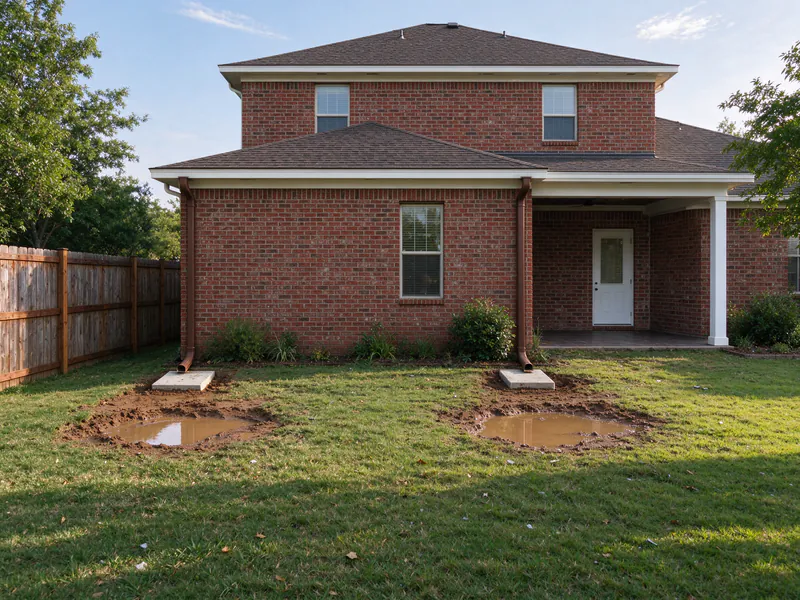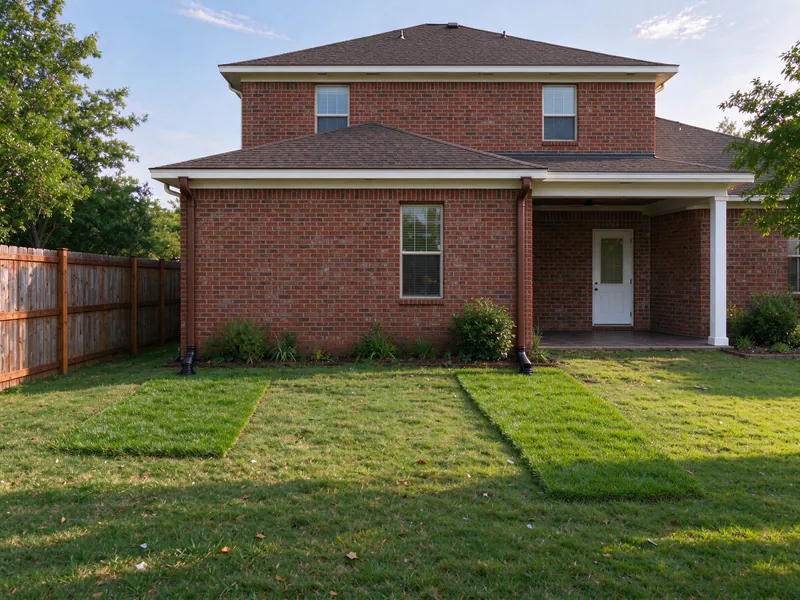
Water turning up in three places at once?
Roof water pools by the patio, the side yard stays soft, and the back corner holds a puddle. When the wet spots have different sources, fixing them one at a time can just move the water along to the next one.
Clay Plano Drainage Company designs and installs whole-yard drainage systems in Plano and the cities around it. We plan one route for the entire lot: what each part collects, how the pipe carries it, and where it legally leaves, which in Plano means toward the street.
What happens on the first visit
We walk the whole lot, front to back, because the outlet usually sits at the front while the trouble sits at the back. Photos or a short video from a storm help.
- Every source. Each downspout, the patio and walks, the neighbor’s grade and every sprinkler zone near a wet spot.
- Every wet area. We note which ones fill during the storm and which stay soft for days, since they need different collectors.
- Fall across the lot. We take elevations from the farthest wet area to the outlet. Plano yards have little natural slope, so inches matter.
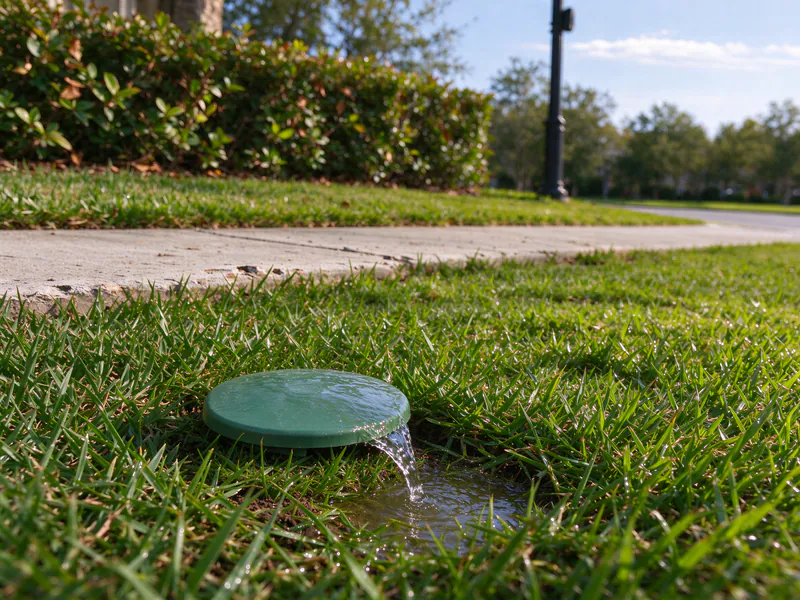
- The outlet. A pop-up emitter in front lawn, an existing line that still flows, or a curb outlet the city permits.
- Pinch points. Side-yard width, gates, AC pads, fence posts, tree roots and the sprinkler mainline.
The written estimate shows the trunk line, each branch, the run lengths, the outlet and what gets put back afterward.
Is the water on top of the ground or in it?
Most problem yards have both, and a system handles each one with a different part. Surface water runs across the lawn during the storm; soil water stays behind after the surface has dried.
| Surface water | Soil water |
|---|---|
| Sheets across the lawn or pours off a roof corner | Ground stays soft a day or more after rain |
| Collected by a catch basin grate or a downspout line | Collected by a French drain section in washed stone |
| Needs enough inlet capacity for the peak of the storm | Needs a long enough collection zone in slow clay |
| Enters solid pipe directly | Enters perforated pipe, then joins solid pipe |
Houston Black, the clay under most of central and east Plano, sheds storm water as runoff far faster than it soaks it in. That makes surface collection the bigger job in many yards, with French drain sections only where the soil stays wet.
How the pieces join into one route
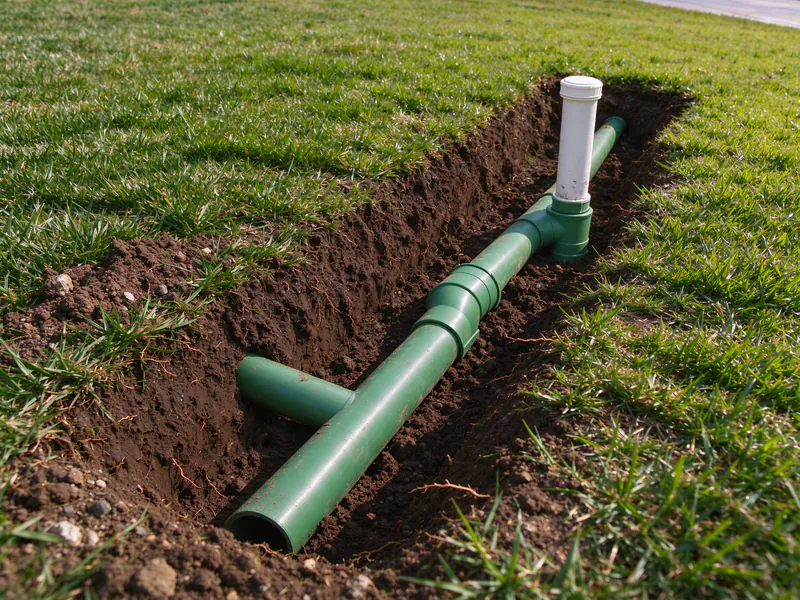
A whole-yard system works like a small tree. Branches collect water where it appears, and they feed a trunk line that carries all of it to one outlet.
- Branches are short runs from each collector: a downspout line, a catch basin, or the solid tail of a French drain section.
- The trunk is the main solid line, sized for what every branch delivers at once and laid at a steady fall toward the outlet.
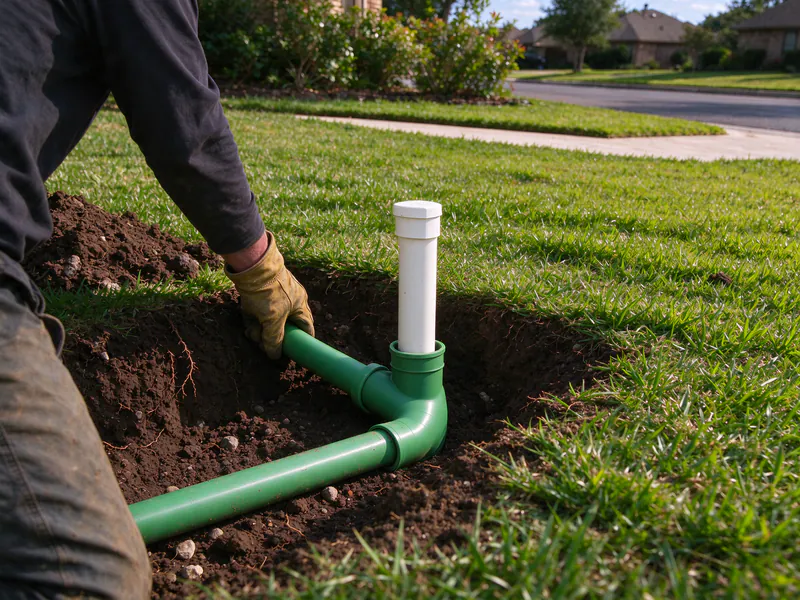
- Junctions use sweep fittings instead of sharp tees, with a cleanout where branches meet, so a hose or jetter can reach every part.
- The outlet is the one place the system lets water go, and the rest of the design is worked backward from its height.
Each branch has to meet the trunk above it, never below. On a flat lot, the outlet’s height decides how deep a collector at the back of the yard must sit.
Corrugated or smooth-wall pipe?
Both turn up in yard drainage, and on long runs the choice matters. Corrugated pipe comes in long rolls and bends around obstacles, but its ridges hold silt and it can sag or flatten under soil and foot traffic.
Smooth-wall PVC, such as SDR-35, keeps its grade over a long run, flushes cleaner and resists crushing. We use each where it fits, and the estimate says which pipe each run gets.
When the storm is bigger than the pipe
Every drain system has a ceiling, and the outlet usually sets it. A system that carries an ordinary storm can still overflow in a rare one, so we plan where the extra water goes before it arrives.
NOAA’s rainfall atlas puts a storm with a 50 percent chance in any year at about 1.80 inches in one hour for central Plano. A storm with a 1 percent chance brings about 3.61 inches in the same hour, and no yard pipe carries that.
- We shape a shallow overflow path at the surface, so water the inlets can’t take runs toward the street and away from the slab.
- We place grates where an overflow spills onto open lawn, not against the house or onto the neighbor.
- We check that the emitter or curb outlet can still let water out while the street gutter runs full.
The guide on how to fix yard drainage problems walks through how each of these parts gets chosen.
How we build a whole-yard system
On a system, the order of work matters more than on a single drain. We build from the outlet uphill, so every branch has somewhere to send water the moment it is connected.
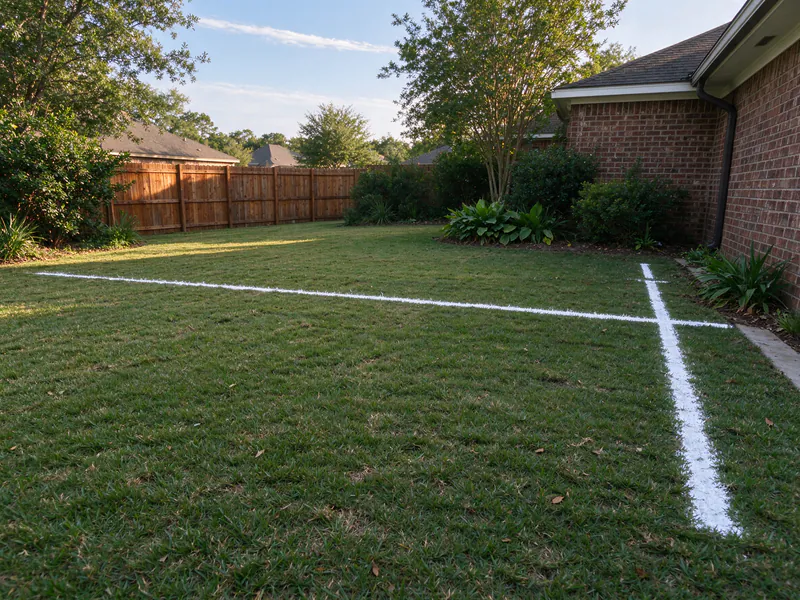
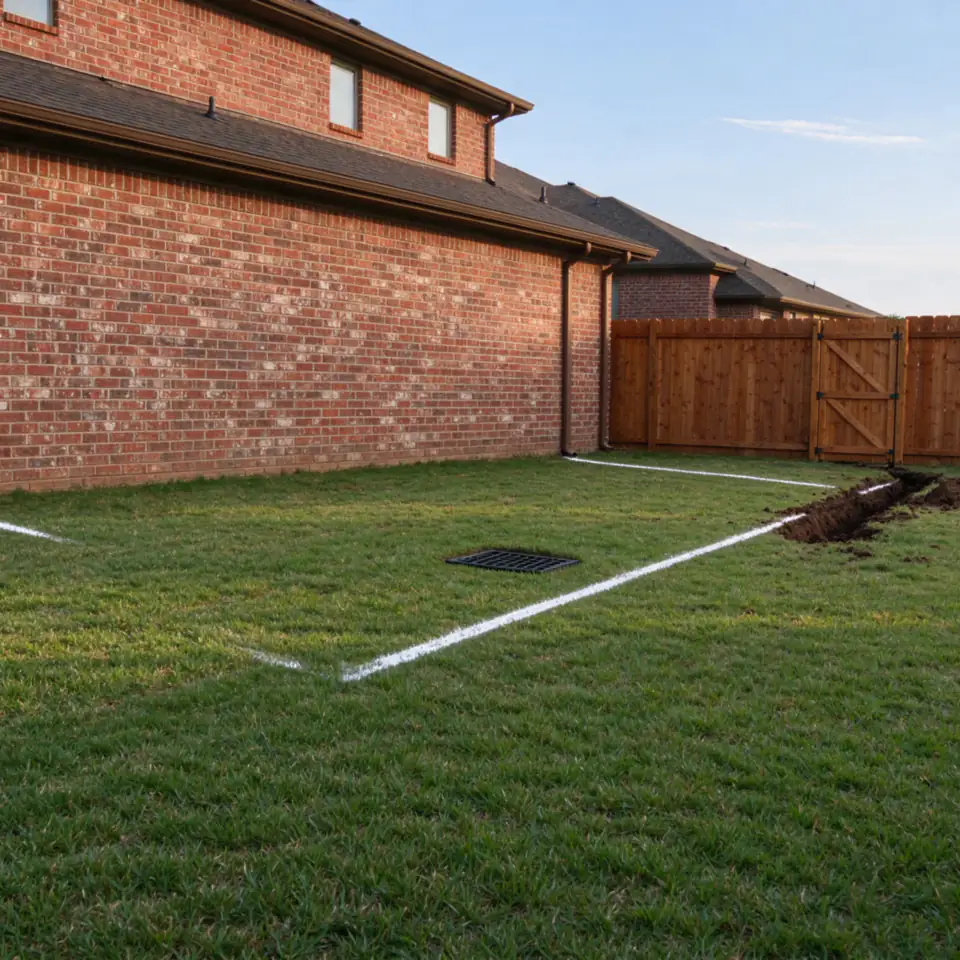
- Locates and layout. Texas811 marks buried lines, and we paint the trunk and branches in white so you can walk the plan.
- Outlet first. We set the emitter or prepare the permitted curb outlet and confirm its height.
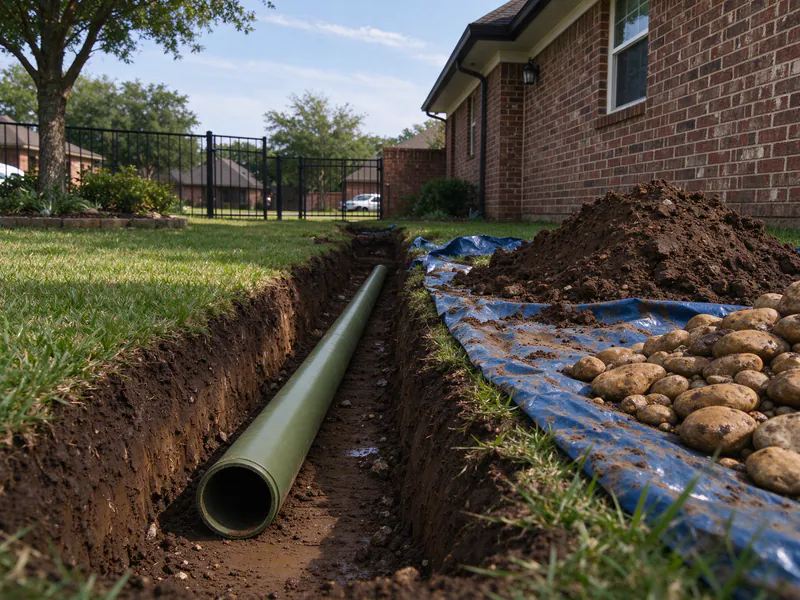
- Trunk line. We trench and lay the main line at its measured fall, working away from the outlet.
- Branches. Each collector goes in and joins the trunk through its fitting and cleanout.
- Test. We run water into each branch in turn and watch it reach the outlet before anything is buried.
- Restore. Soil comes back off the tarps, the sod strips go back down and crossed sprinkler lines get repaired.
- Walk-through. We show you every cleanout and the outlet, and what each one needs to stay clear.
Sod is cut in strips and set aside, and silt controls keep loose soil out of the street while trenches are open. The guide to what happens during drainage installation follows a day on site.
What a whole-yard drainage system costs
Our typical range for a whole-yard drainage route is $3,000 to $8,000 per project. It covers the collectors, trunk line and outlet the visit calls for, and the written estimate sets your figure from the drawn route.
The number of zones and the total run length move it most, followed by how many downspouts and basins tie in, whether the outlet is the curb or a yard sump and pump, depth, soil and access. If the lot also needs regrading, we price it alongside.
- The drainage cost guide breaks a system down into its parts.
- The cost estimator lets you rough out your own yard’s run lengths.
Keeping a system working
A system has more places to clog than a single drain, and most of them are at the surface. Clear the grates and the outlet after the leaves drop and again before the spring storms.
If one branch slows while the others run, flush it through its cleanout. If the whole system backs up, look first at the trunk or the outlet, and drain repair and cleaning can find the trouble without digging up every line.