French drain stopped working?
A drain that used to handle storms and now lets the yard flood has failed somewhere between its inlet and its outlet. The hard part is finding where without digging up the whole line.
Clay Plano Drainage Company repairs and cleans French drains, yard drains and downspout lines in Plano and nearby cities, including systems someone else put in. We test the line, find the failure and fix only what failed, unless the design itself was the problem.
What happens on the first visit
We trace the system end to end before touching it. If you know where the outlet is, or have a sketch from the install, that saves time.
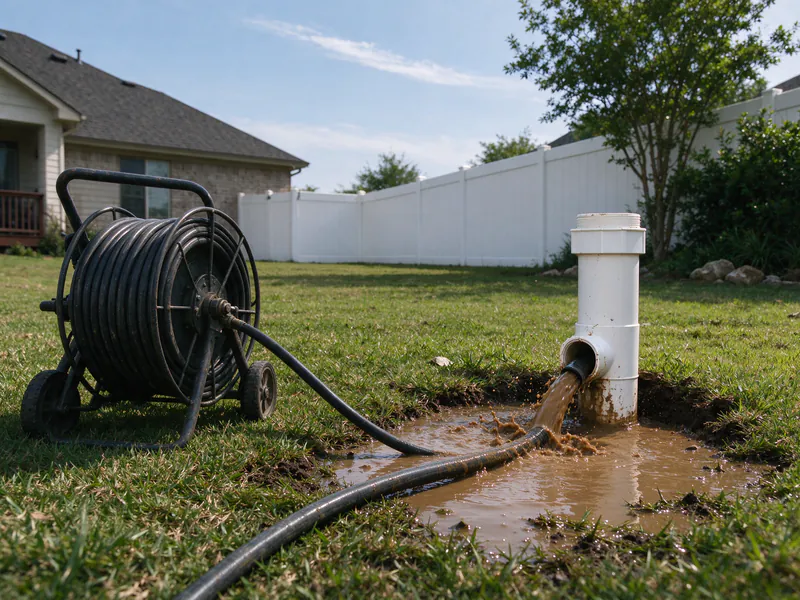
- The outlet. We find it first, because everything upstream depends on it. A buried, crushed or clipping-packed outlet stops the whole system.
- Inlets and cleanouts. Grates, basins and any cleanout caps along the run.
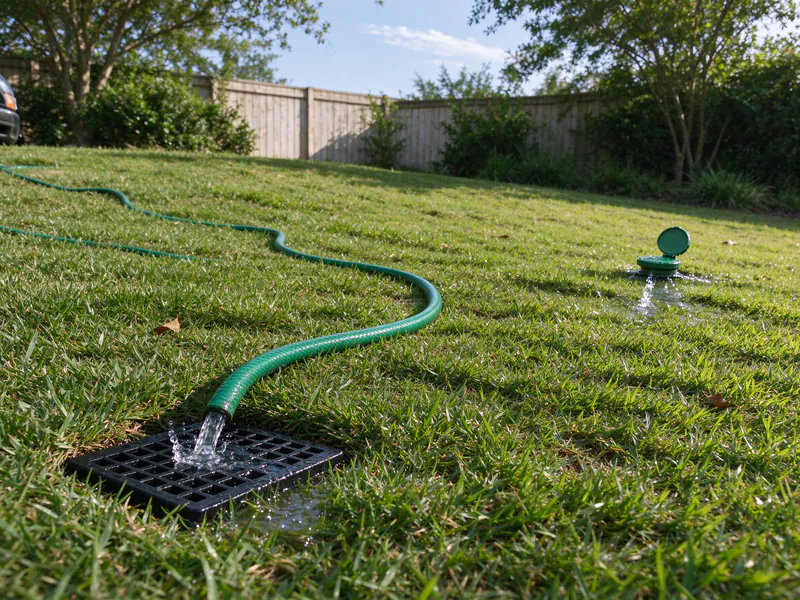
- Flow test. We run water into the highest point and watch where it goes, where it stops and how long it takes to reach the outlet.
- Surface clues. A sunken strip over the line, a wet spot partway along, or water bubbling up out of a grate.
- The original design. Whether the drain had real fall and a real outlet to begin with.
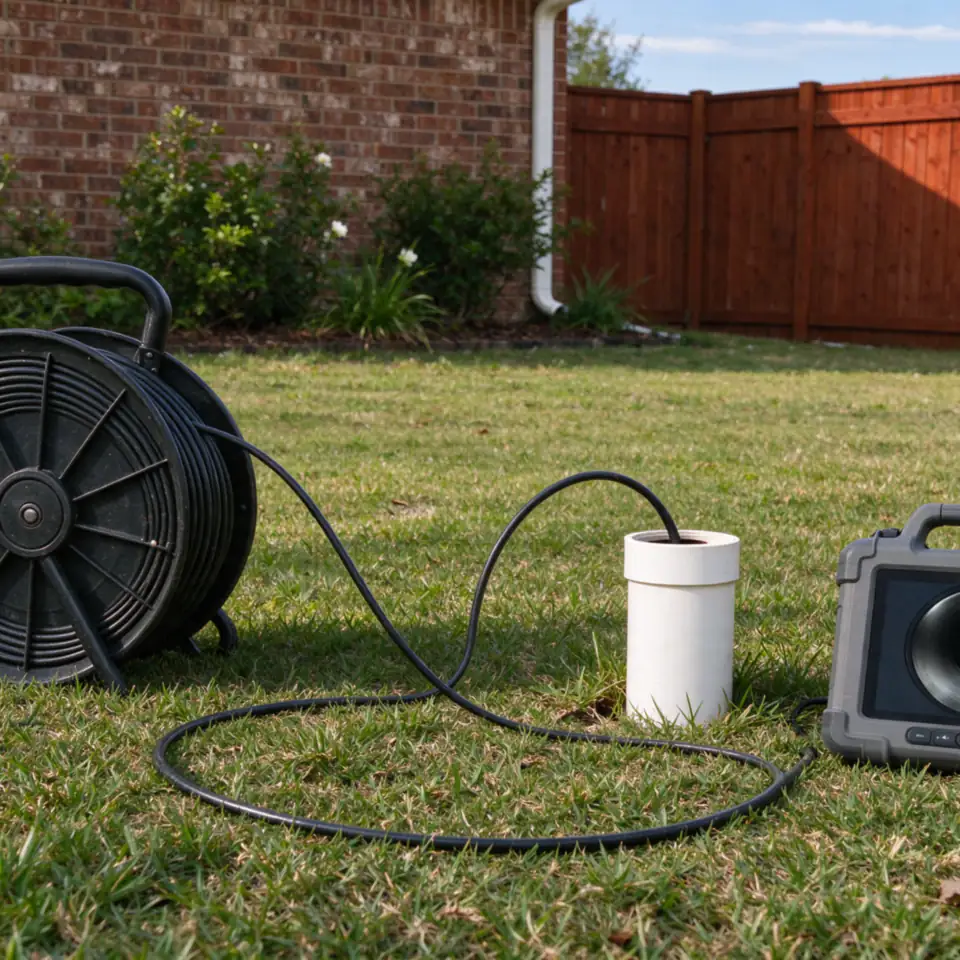
If cleaning will fix it, the estimate says so. If the flow test points to a break, the camera goes in next.
What goes wrong with drains in Plano clay
Drain failures fall into a handful of kinds, and each one shows up differently in the yard. Matching the symptom to the cause tells us where to look.
| What failed | What you notice |
|---|---|
| Outlet buried, blocked or crushed | No water at the emitter or curb, and the yard floods along the whole line |
| Silt and clay fines in the pipe | Slow drainage that backs up in big storms |
| Filter fabric clogged with clay | The trench fills and stays wet even though the pipe is clear |
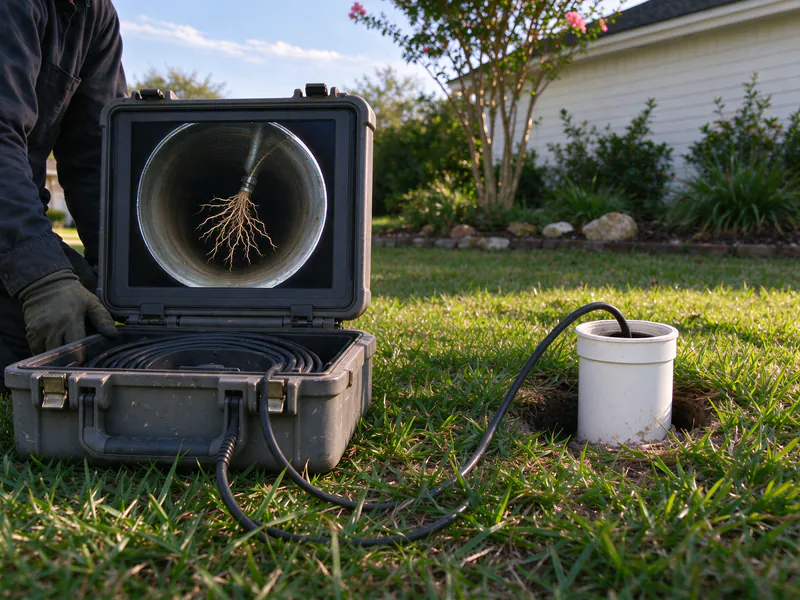
| Roots in the pipe | Slow flow near trees, worse each year |
| Crushed or separated pipe | A wet spot or a small sinkhole partway along |
| A belly, or low section, in the pipe | Water stands in one stretch and silt builds up there |
| No fall or no outlet from day one | It never really worked |
Houston Black clay is more than half clay-sized particles, and those fines are what migrate into stone and pipe when fabric is missing, torn or the wrong kind. The guide to French drains in clay soil explains how a drain is built to resist it.
May and October are the Plano area’s wettest months, at about five inches each. A storm in either month is a good time to notice which part of the yard a drain has stopped serving.
Cleaning: snaking or jetting
A line that is sound but slow needs cleaning, not digging. We clear it from an inlet, the outlet or a cleanout, whichever reaches the clog.
- Snaking pulls roots and packed debris out of a short line.
- Jetting uses a high-pressure nozzle to scour silt off the pipe walls and wash it out the outlet, and suits longer runs.
- A flow test afterward shows whether the line now runs freely.
Cleaning clears the pipe, but it can’t reach clay packed into the stone around a French drain’s pipe. If water still won’t move after a clean line tests clear, the trench itself has clogged, and that section needs rebuilding.
Repairing a section
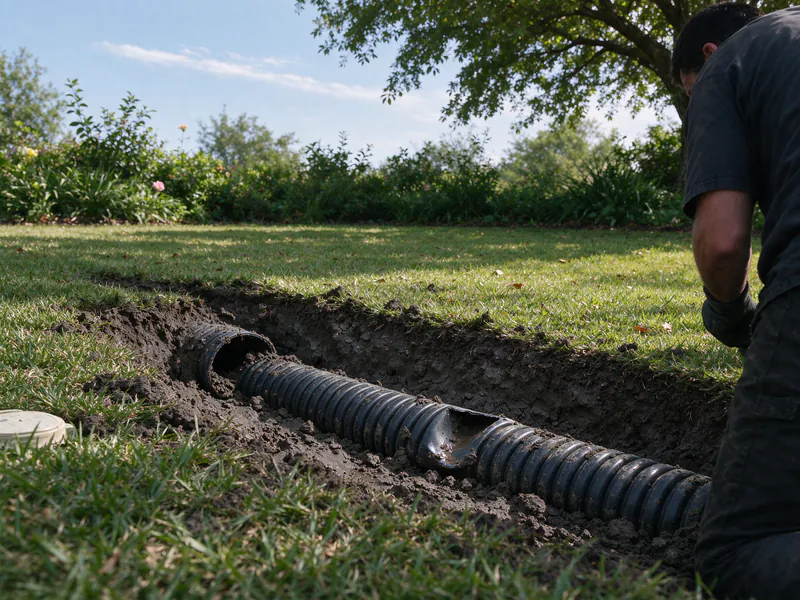
A camera shows the inside of the line: the crushed joint, the root mass, the belly. Then we dig only there.
- Locates. Texas811 marks buried lines before we open anything.
- Open up. We cut and set aside the sod over the failure and keep the dig as short as the damage.
- Replace. New pipe goes in where the old one failed, with new stone and fabric where those are clogged too.
- Fall. We reset the section to the line’s fall, so it can’t hold a belly.
- Test and close. Water runs through the whole line before we backfill and put the sod back.
Each section repair is priced after the camera finds it, because its depth, its length and what sits on top, whether sod, beds or flatwork, aren’t known until then.
When repair isn’t the answer
New pipe alone won’t fix a drain that had no outlet, ran uphill, or was laid where the water wasn’t. If the visit shows that, we say so. The fix is then a properly planned French drain, or a different tool, such as a catch basin for surface water or regrading for a yard that tilts the wrong way.
Still wet after a new drain?
A drain that has left the yard wet since the day it went in has a design problem, not a worn part. The fix starts with finding which one.
- Wrong collector. A French drain under surface runoff, or a grate where the water is in the soil.
- Outlet too high. The outlet sits above the wet area, so the line holds water instead of releasing it.
- Too short a collection zone. In slow clay, a short trench only drains the soil right beside it.
- Water from somewhere else. A sprinkler zone or a neighbor’s runoff the drain was never meant to take.
Adding cleanouts
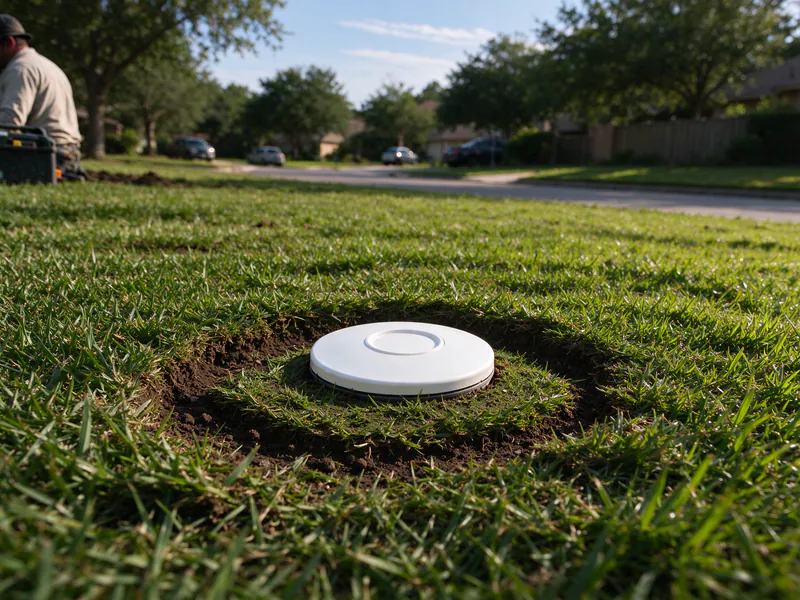
A drain without cleanouts can only be reached from its ends, which makes every clog harder to clear. While a line is open for repair, we add cleanouts where lines join or turn.
After that, the next cleaning is a hose or a jetter at the cleanout, not a shovel. Several lines tied together are easier to keep up as one yard drainage system with cleanouts at every junction.
What drain repair and cleaning cost
Our typical range for cleaning the first drain line is $250 to $600 per visit. That covers snaking or jetting one existing line, up to about 100 feet, with a flow test; camera inspection and digging are extra.
A section repair is priced once the camera has found the failure, from where and how deep it is, how much pipe gets replaced, what sits on top, any root intrusion, and whether the original slope or outlet has to be redone.
- The drainage cost guide puts repair beside new work.
- The guide on how long a French drain lasts covers what wears a drain out.
- If the water was never the drain’s to fix, the standing water page starts from the source.