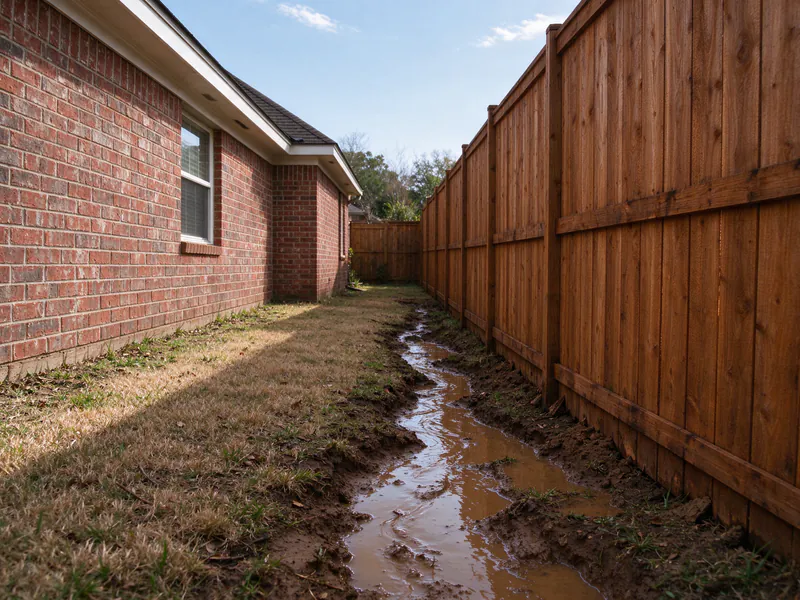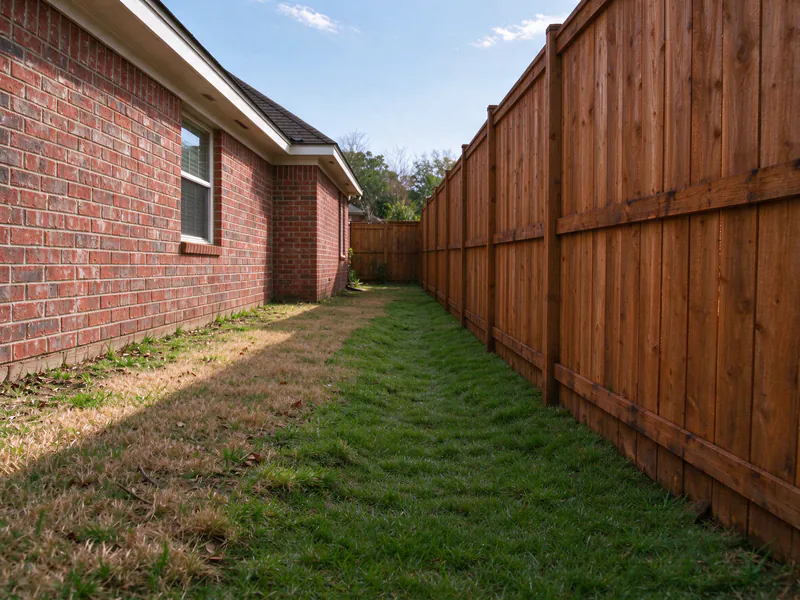
Water running toward the house instead of away?
When the ground beside the slab is flat or tilts inward, every storm sends water to the foundation. Regrading reshapes the soil so the yard carries water away on its own, with no pipe to clog.
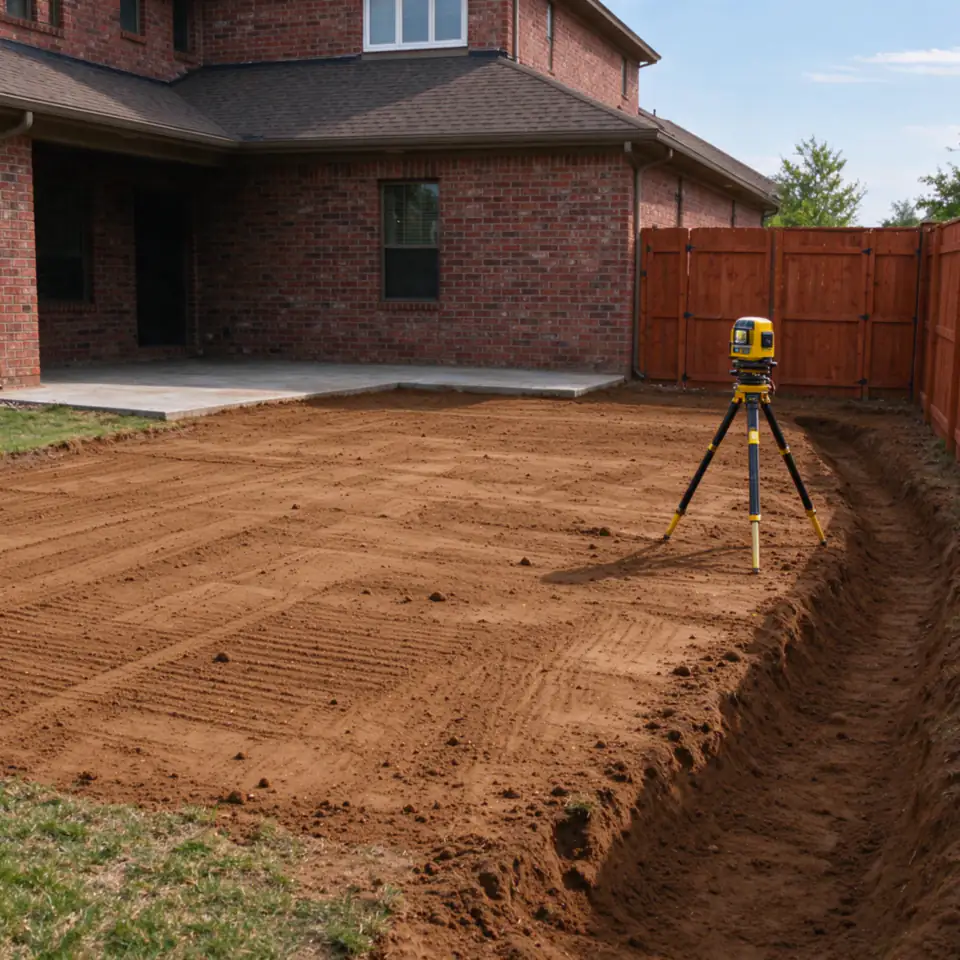
Clay Plano Drainage Company regrades yards for drainage in Plano and nearby cities. We measure the slopes first, move only as much soil as they need, and keep the new grade below the brick and siding.
What happens on the first visit
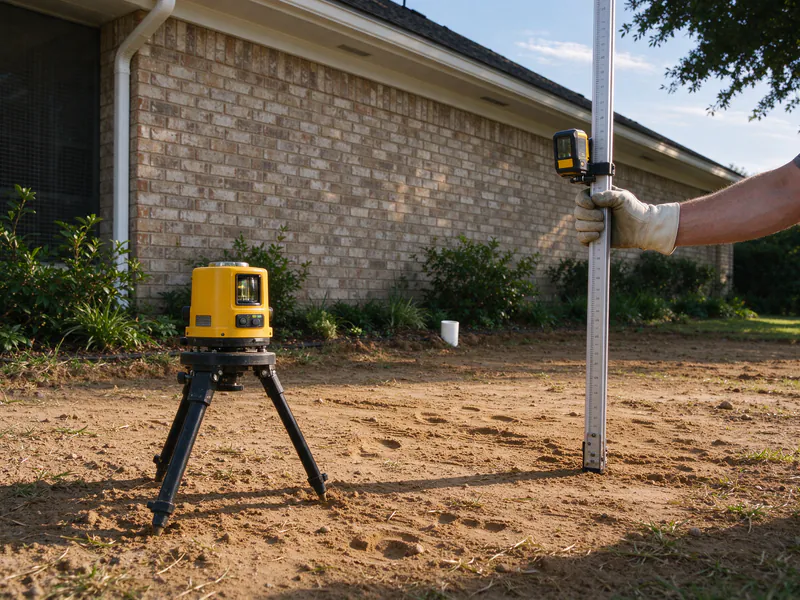
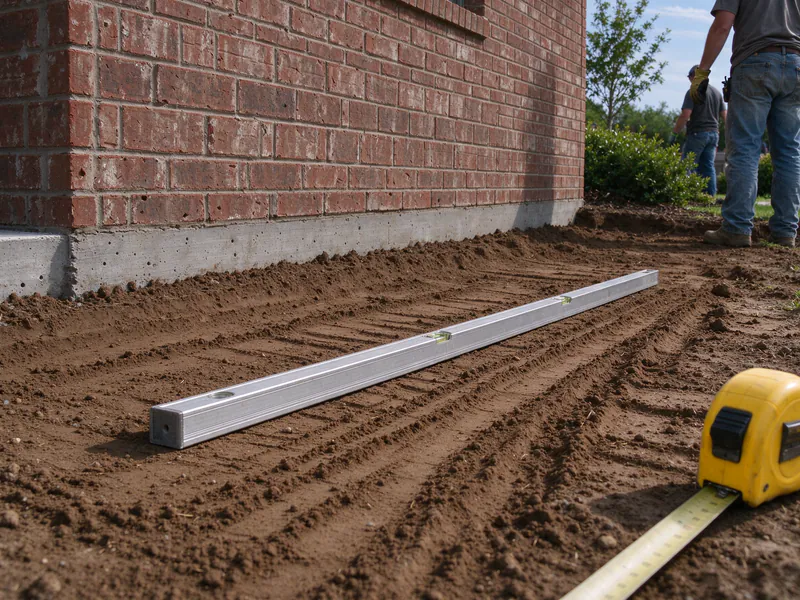
We take spot elevations instead of guessing. A yard that looks like it slopes away often has a flat band against the house, where beds, mulch or settled soil have changed it over the years.
- Around the slab. Heights at the beam on every side, and a few steps out from it.
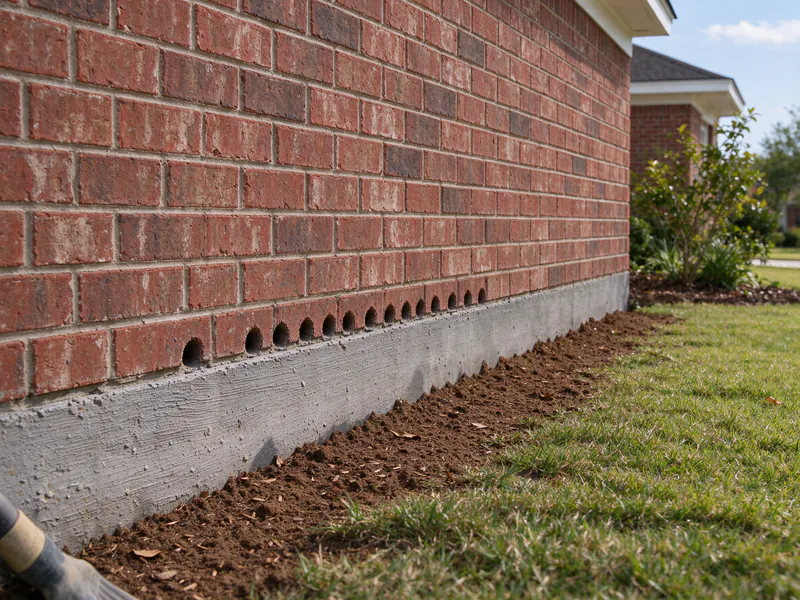
- Brick ledge and weep screed. The bottom of the brick, siding or stucco screed sets how high soil can go.
- Across the yard. Fall from the back to the side yards and on to the street.
- The neighbor’s grade. Where the lots meet, and what water crosses the line.
- Soil. Clay, topsoil depth, and in far west Plano, chalk close to the surface.
The written estimate shows the area, the slopes we’ll set, any fill to bring in and the restoration.
How much slope a yard needs
Enough to keep water moving without washing soil away. Cities around Plano write their minimums into their engineering standards, and they agree more than they differ.
| Where | Minimum |
|---|---|
| Away from the house | 6 inches of fall in the first 10 feet (McKinney and Garland) |
| Along side and back yards | 1 percent (Plano lot detail, McKinney) |
| Grass swales | 1 percent in Garland, 2 percent in McKinney |
| Earth slopes | No steeper than 3 to 1 (McKinney, Garland) |
Six inches in ten feet sounds easy until you see it against a house. The soil at the beam has to start well below the brick ledge and still fall to the lawn, and on a flat lot the lawn may not have that much room to drop.
We confirm the standard that applies at your address before we set a grade.
Filling against the foundation
The tempting quick fix is piling soil against the house. It can help, but done wrong it buries the weep screed, brings wet soil up to the brick and holds water against the wall.
- Clearance. We keep finished grade below the brick ledge, siding and weep screed, so the wall can drain and dry.
- The right fill. Clay-rich select fill holds a slope next to the house. Sandy topsoil soaks up water and holds it on top of the clay.
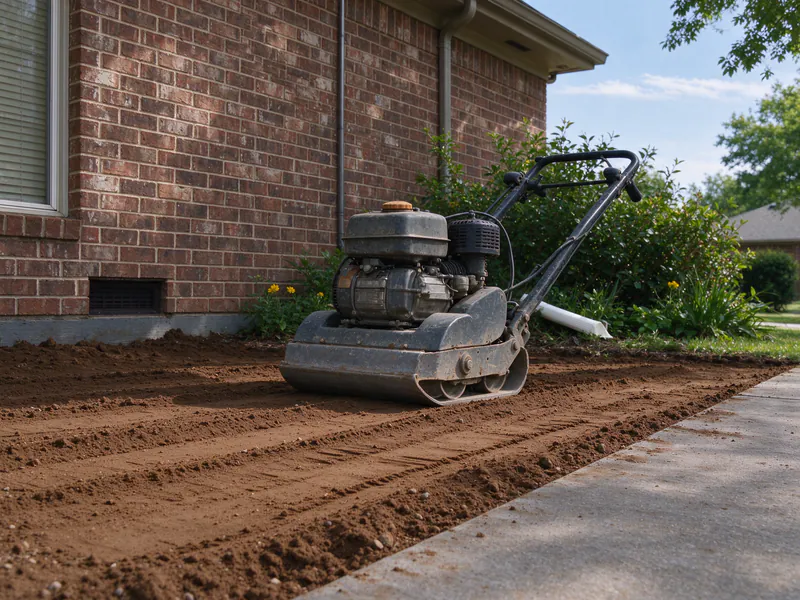
- Compaction. Fill goes down in thin layers, each compacted, so it doesn’t settle into a new low spot by next spring. Mesquite, for one, requires fill on residential lots to reach 95 percent standard proctor.
- Topsoil last. A thin layer for the grass, not the grade itself.
How we regrade a yard
Grading looks like simple dirt work, but the order keeps it from settling or washing out. We run the same steps on every regrade.
- Locates. Texas811 marks buried lines before any soil moves, and we flag sprinkler heads.
- Sod and topsoil. We cut the sod in strips and set it aside, then strip the topsoil where we need to reshape the subgrade.
- Cut and fill. High spots come down and low spots fill, in thin layers compacted one at a time.
- Check the slopes. A laser level confirms the fall at the beam, across the yard and into the swales.
- Finish. Topsoil goes back in a thin layer, then sod or seed, with sprinkler heads reset to the new grade.
- Water test. We run a hose across the new grade and watch where the water goes before we call it done.
Creek-side lots and erosion
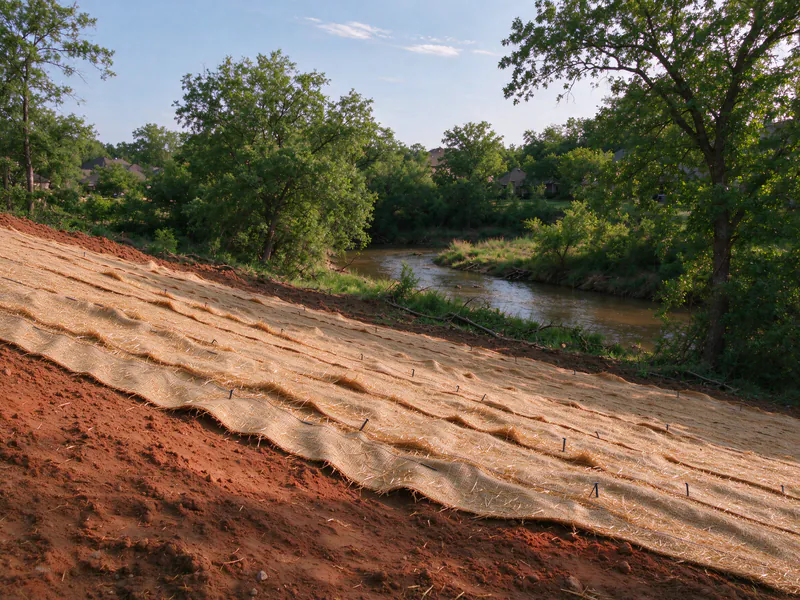
Lots along Rowlett Creek and the Oak Point corridor sit on eroded silty clay slopes. Water that reaches them fast cuts gullies and carries the yard toward the creek.
On these lots we slow water down instead of speeding it up:
- Rock at every pipe or swale outlet, so the discharge spreads instead of cutting a channel.
- Erosion blankets or wattles on bare soil until the grass roots in.
- Gentle swales that carry water without turning into ditches.
A yard near a creek may also sit in a mapped floodplain, which is a different question from yard drainage. The guide on floodplain or drainage problems explains how to tell them apart.
Regrading and your neighbor
Moving soil changes where water goes, and Texas law cares where it lands. Texas Water Code section 11.086 says no one may divert or impound natural surface flow in a way that damages another property.
So we never raise one lot to push water onto the next. Plano doesn’t permit lot-to-lot drainage, and our grades send water to the side yard swales and the street. The guide to neighbor water runoff in Texas covers disputes over water that crosses the line.
When grading isn’t enough
Some yards don’t have the fall to drain at the surface, and some problems come from water in the soil, not on it. Grading alone won’t fix those.
- Water that sits in a low spot the slope can’t reach gets a catch basin at the bottom of the new grade.
- Roof water gets downspout lines, so the new slope isn’t carrying a roof’s worth of rain.
- Several sources across the lot call for a whole-yard drainage system, with grading around the inlets.
- A slab with wet soil along one side may need foundation drainage as well.
What regrading costs
Our typical range for drainage regrading is $1,000 to $4,000 per project. It covers re-sloping a typical yard area away from the slab and toward a swale or outlet, using existing soil plus modest fill; the estimate sets yours.
The area and how much soil moves set most of it. Imported select fill, equipment access through the gate, sod or seed, sprinkler head changes and the clearance below siding move it from there. The yard regrading cost guide has more on each.