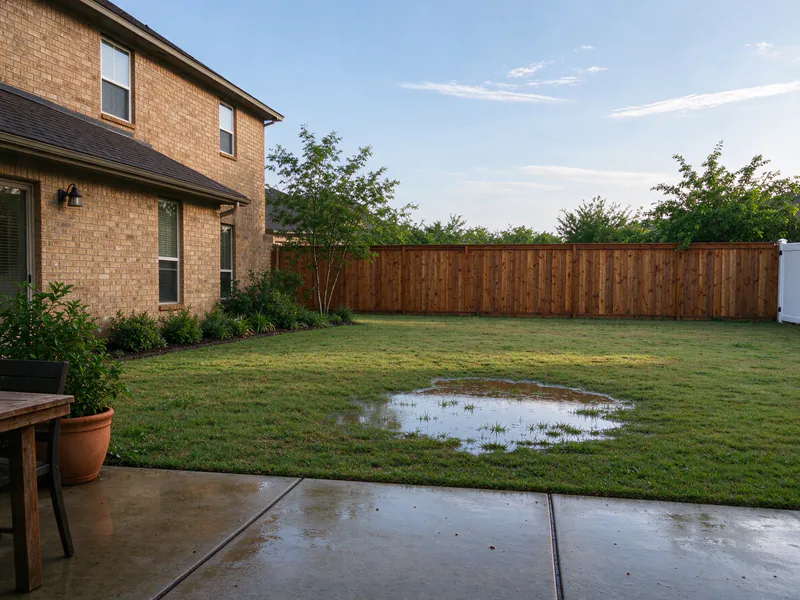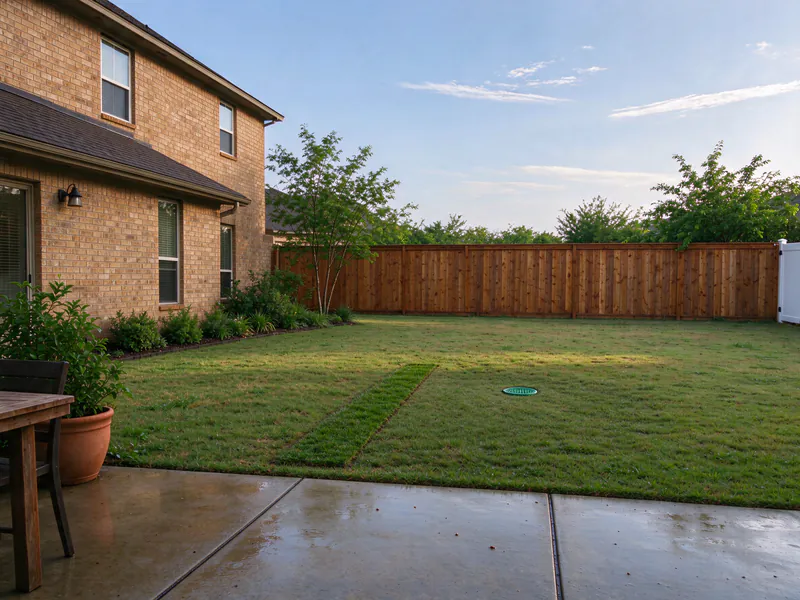
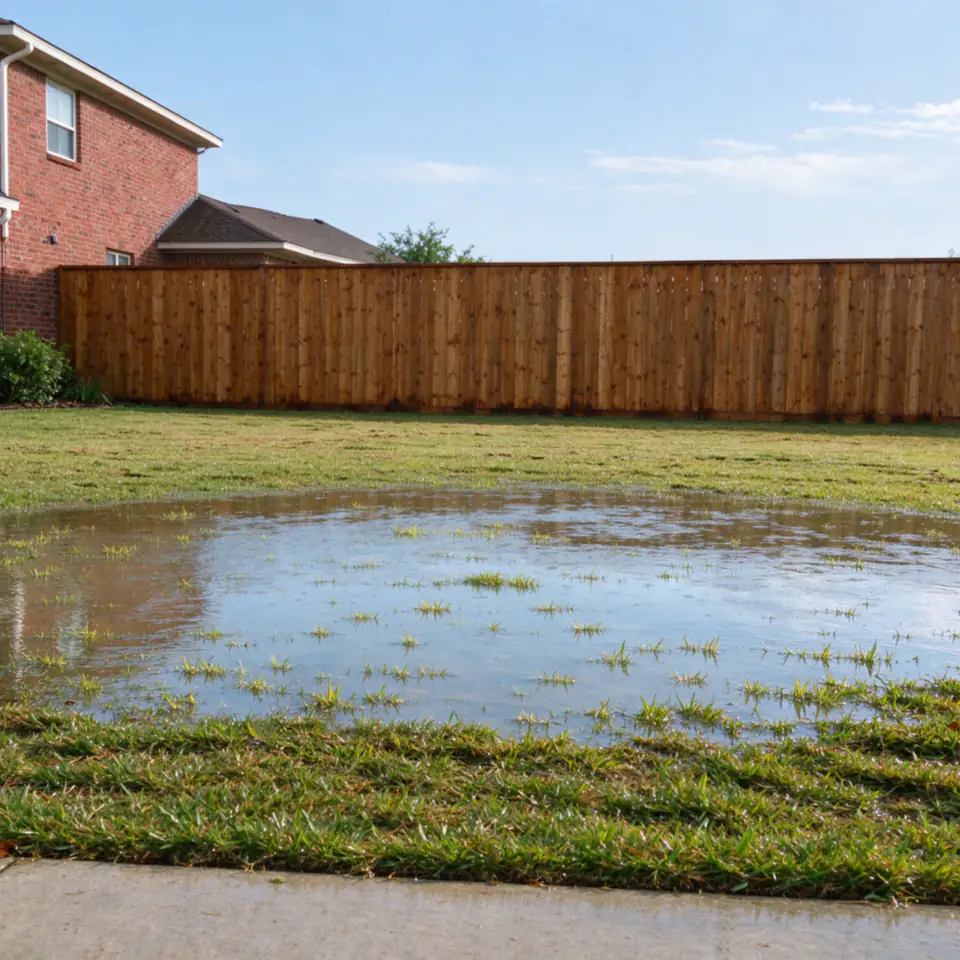
Puddles that won’t go away?
Standing water is a symptom, not a diagnosis. The same puddle can come from roof water, a low spot, a sprinkler zone or clay that can’t drain, and each one has a different fix.
Clay Plano Drainage Company works out where standing water comes from in yards across Plano and nearby cities, then builds the fix that matches. Sometimes that’s a drain. Sometimes it’s a sprinkler head.
What happens on the first visit
The first question is timing: when the water shows up, and how long it stays. Photos with the date and time on them help more than anything else you can send.
- When it appears. During the storm, a day later, or on dry days.
- How long it stays. Hours, days, or all week.
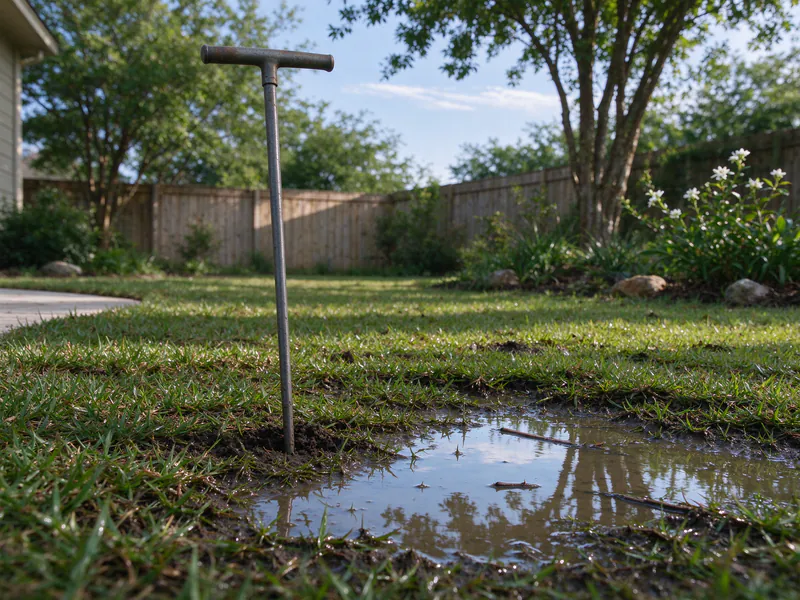
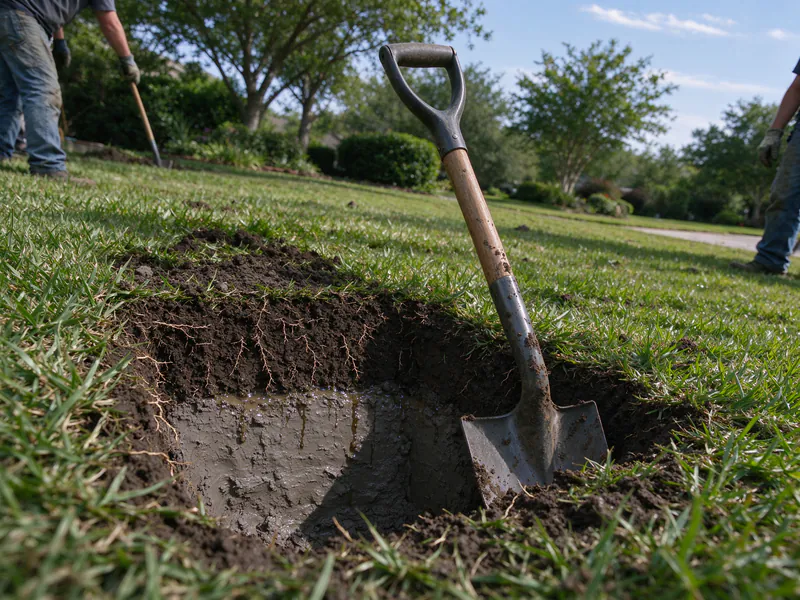
- The probe. We push a soil probe in around the wet area to see whether the ground below the surface is saturated or dry.
- Upstream. Downspouts, the patio, the neighbor’s grade and any sprinkler zones that reach the spot.
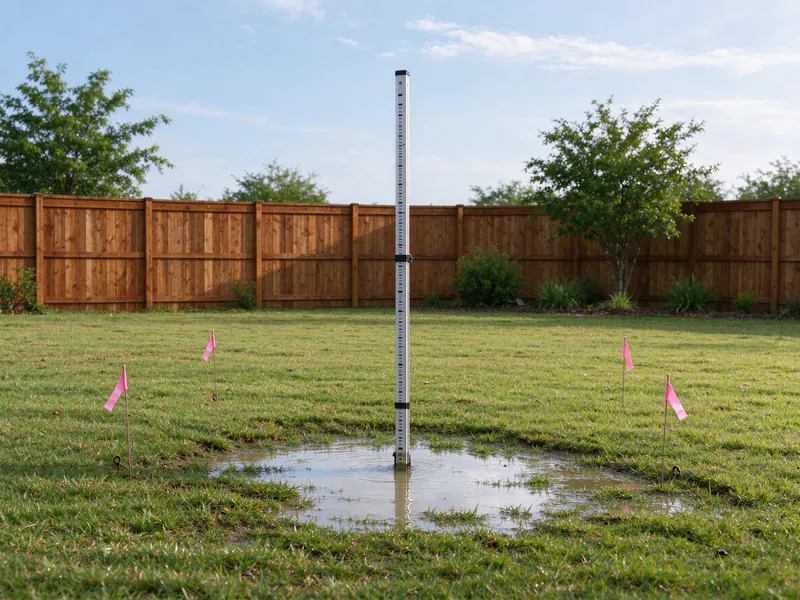
- The way out. Spot elevations to find the low point and the fall to an outlet.
We explain the cause in plain terms. If two causes overlap, we say which to fix first and why.
Why water sits on Plano clay
Plano’s clay is slow to take in water. Houston Black, under much of central, east and north Plano, absorbs about 0.03 inches an hour, so a one-inch storm can take more than a day to soak in.
That slowness turns small features into standing water:
- Flat lots. Most of Plano sits on 0 to 3 percent slopes, so a dip of an inch or two holds water.
- Compacted soil. Construction traffic, play sets and worn foot paths press clay tight, and even less soaks in.
- Perched water. Topsoil or sand laid over clay holds rain in the top layer, because the clay below won’t take it. This is easy to mistake for a high water table, which is less likely on Plano’s clays.
- A low yard. A lot that sits below the street or its neighbors collects everyone’s runoff.
Matching the fix to the cause
Once we know where the water comes from and where it can go, the choice of fix follows. Here’s how the causes line up with the work.
| Cause | Fix |
|---|---|
| Roof water dumped in one place | Downspout lines in solid pipe |
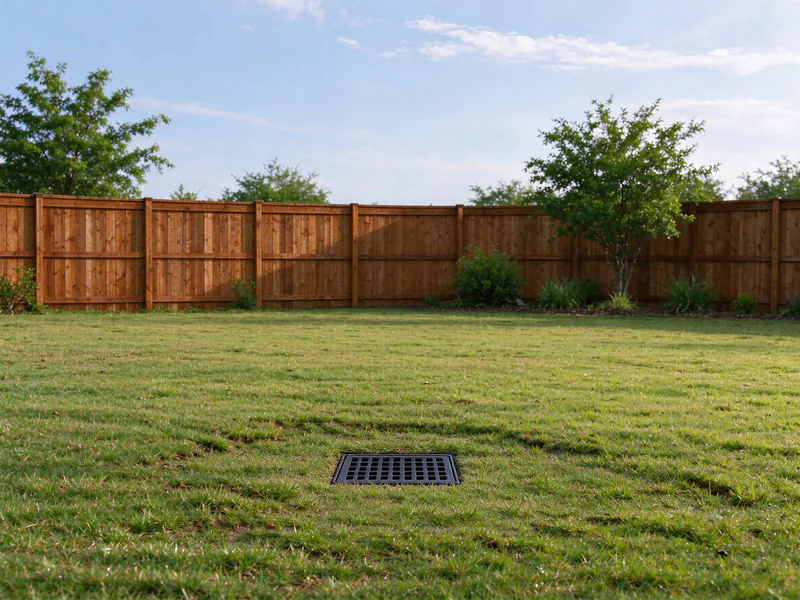
| Surface water collecting in a low spot | A catch basin at the true low point |
| A shallow bowl or reverse slope | Regrading the area |
| Soil that stays wet after the surface dries | A French drain |
| Several sources across the lot | A whole-yard drainage system |
| No fall to any outlet | A yard sump and pump |
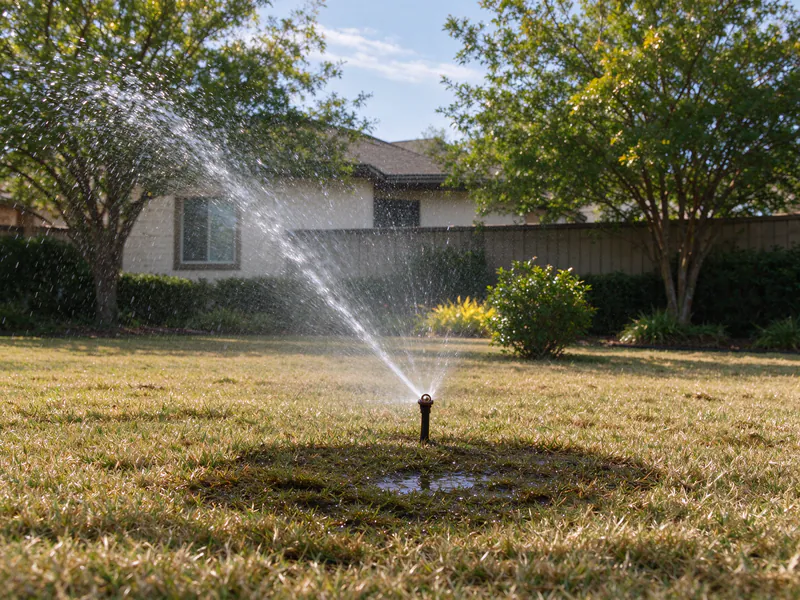
| Water on dry days | A sprinkler or plumbing repair |
A dry well sounds like an easy answer, but in clay this slow it fills and stays full. The guide on whether dry wells work in clay explains why.
What standing water does to a yard
A puddle that clears in a few hours is just a wet lawn. One that lasts for days starts doing damage, and the damage depends on where it sits.
- In the lawn. Grass under standing water thins and dies back, and the bare patch holds water even longer next time.
- Underfoot. Walking or mowing on soaked clay packs it tighter, so less water soaks in at the next storm.
- Beside the house. Water against the beam soaks the clay under one part of the slab, which foundation drainage is built to stop.
- At the fence and beds. Constantly wet soil rots fence posts and drowns plant roots.
What you can check before we visit
A little homework narrows the cause before anyone digs. These checks cost nothing and take one storm and one dry day.
- Log the timing. Note when the water appears and when it’s gone, with a photo each time.
- Run each sprinkler zone alone on a dry day and watch the wet spot.
- Do a meter test. With every tap and the sprinklers off, see whether the water meter still moves.
- Watch the downspouts during a heavy rain, and follow where their water goes.
- Look uphill. Note what the neighbor’s yard, patio or driveway sends your way.
Water from next door
If a neighbor’s yard, sprinklers or a new fence line sends water onto yours, part of the fix may sit on their side.
- Water sent over. A higher yard, a patio or a sprinkler zone that throws water across the line.
- Water held back. A raised bed, a rock pile or a solid fence along the lot line can dam water on your lot just as surely.
- The rules. Plano lots are designed to drain to the street, not across each other, and Texas law bars diverting natural flow in a way that damages another property.
Many fixes stay on your side of the line, such as a basin and solid pipe that carry the incoming water to your own outlet. The guide to neighbor water runoff explains where the rules draw the line.
A creek, a floodplain or a drainage problem?
A yard near a creek that floods only in the biggest storms may sit in a mapped floodplain. That’s a different question from yard drainage, and the answer changes what can be built.
- Water that rises from the creek side and recedes with the creek points to the floodplain.
- Water that collects from the house, the roof and the lawn points to drainage.
- Both can happen on the same lot.
The guide on floodplain or drainage problems shows how to check your address.
What fixing standing water costs
We price standing water as whichever fix the visit calls for, because the cause decides the job. Each fix has its own typical range on its page, and the written estimate shows the one your yard needs.
What moves the total is the source of the water, which fix applies, the distance to a legal outlet, whether a pump is needed, and the restoration afterward.
- The drainage cost guide lays the fixes side by side.
- The drainage assessment helps you sort the symptoms before we visit.