Is your yard the lowest spot around?
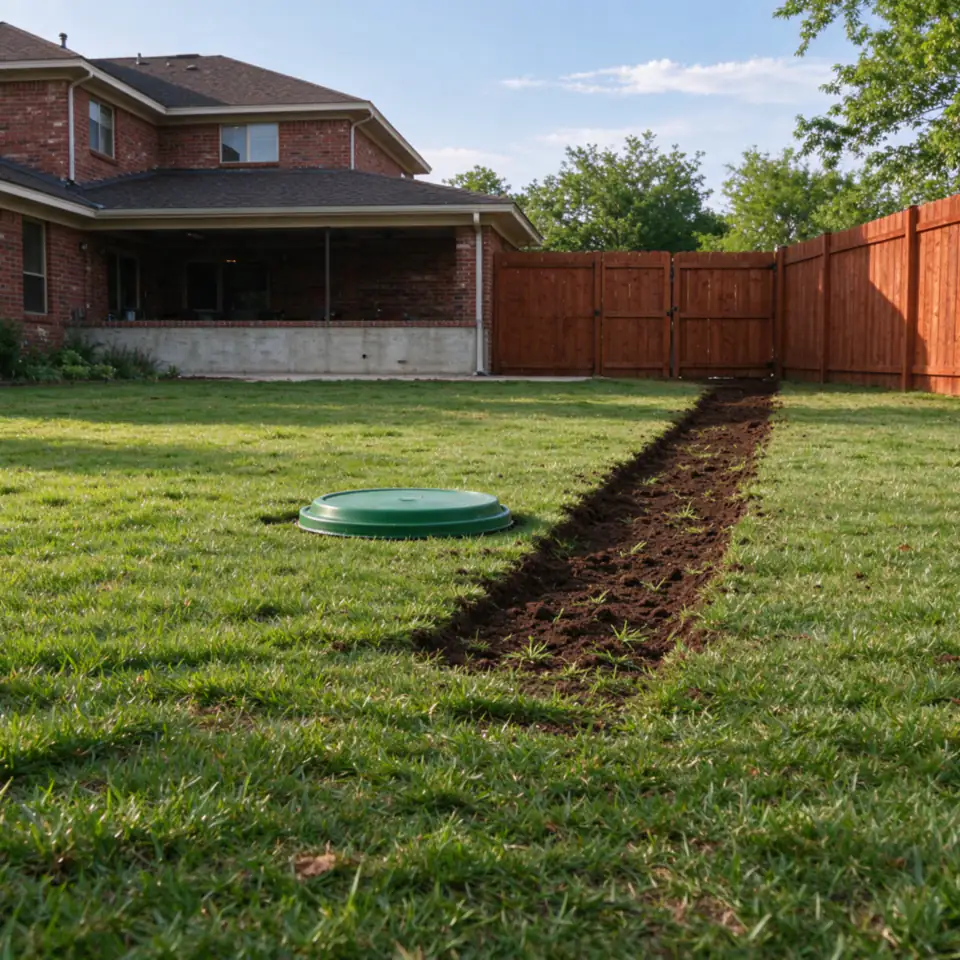
Some lots have nowhere downhill to send water. When the back yard sits below the street and every side, a drain can collect water but can’t move it out, and a pump does the lifting.
Clay Plano Drainage Company installs yard sump pump drainage in Plano and nearby cities, on flat lots where gravity can’t reach a legal outlet. A pump is our last choice, not our first, so we prove gravity won’t work before we price one.
What happens on the first visit
We measure before we recommend anything with a motor. A few inches of fall found in the right place can save you a pump and its upkeep.
- Fall in every direction. Spot elevations from the wet area to the street, both side yards and any existing line.
- Where the water comes from. Roof, neighbors, sprinklers and soil, because the pump only has to handle what reaches it.
- Basin location. The true low point, clear of the slab, beds and play areas.
- Power. Whether an outdoor GFCI circuit runs near the basin site.
- Discharge route. From the basin to the curb or another approved outlet, and what it has to cross.
The written estimate shows the basin, the pump, the alarm option, the discharge route and the outlet.
When a lot has no fall
Plano is flat. Most of the city’s soils sit on 0 to 3 percent slopes, and some lots were graded lower than their neighbors or the street.
In west Allen, along Rowlett Creek, flat Tinn clay floods now and then and has almost no natural slope. Lots like these are where pumps earn their place.
- A back yard below the street, with no fall through either side yard.
- A corner lot collecting water from several neighbors.
- An old drain laid without fall that can’t go deeper, because the outlet sits too high.
- A pool or patio added later that boxed in the low corner.
How a yard pump system works
Water reaches the basin the way it reaches any drain: through a catch basin grate, a French drain or downspout lines. What changes is what happens next.
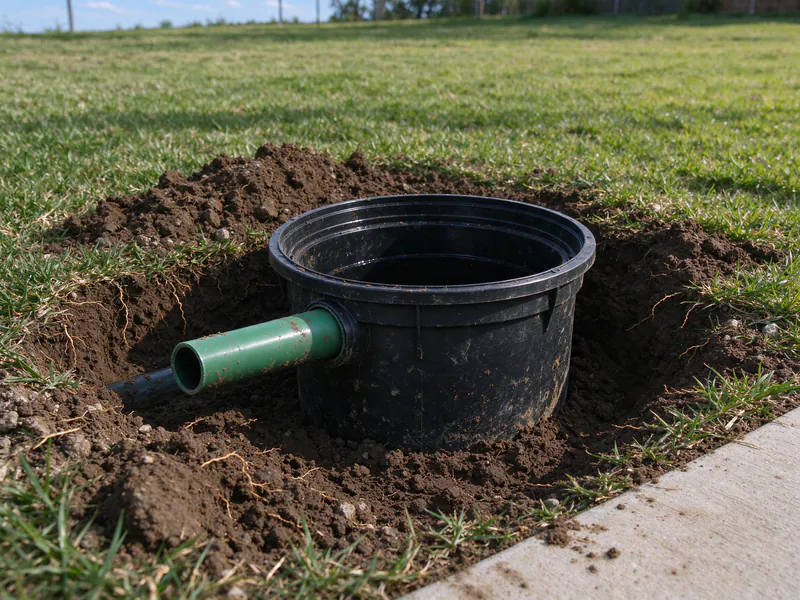
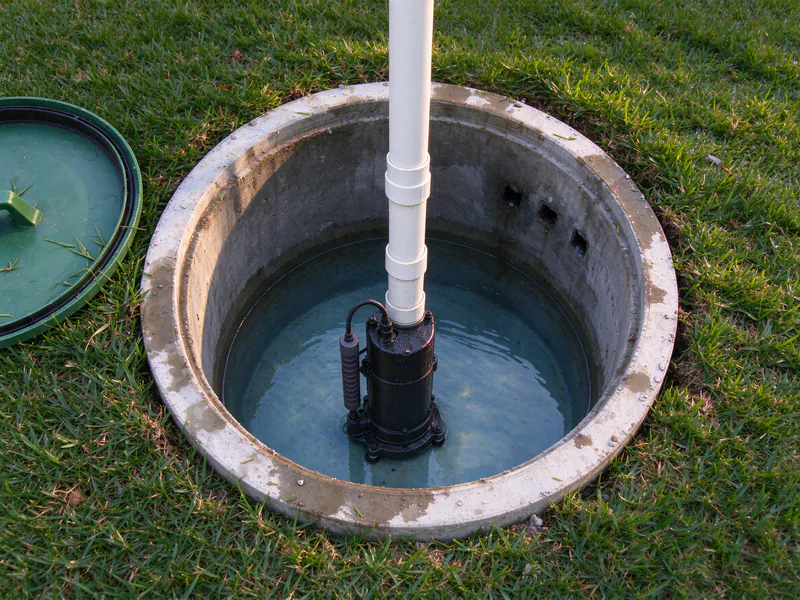
- The basin is a buried tank with a lid at lawn level, and the inlet pipes enter near its top.
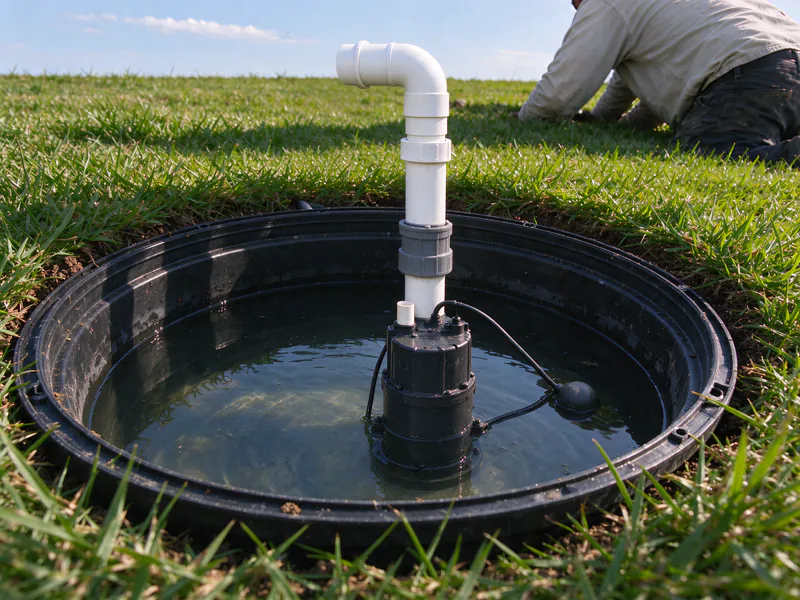
- The pump sits on the bottom. A float switch turns it on as water rises and off as it drops.
- The check valve on the discharge keeps water in the line from draining back each time the pump stops.
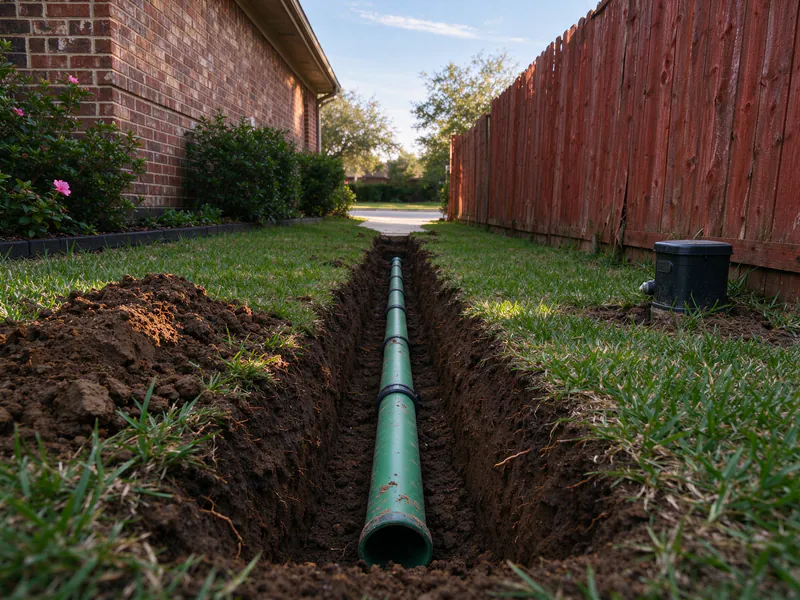
- The discharge line is buried solid pipe to the curb or another approved outlet.
- The alarm, if you want one, sounds when the water rises above where the pump should have started.
The pump needs a dedicated outdoor GFCI circuit. If the house has none near the basin site, an electrician adds it, and that work sits outside our range.
Sizing the pump to what feeds it
A pump is chosen for the water it has to move and the distance it has to push it. Both come out of the first visit.
- What arrives. Roof area tied in, the number of grates and the size of the yard draining to the basin.
- Lift. How high the water rises from the basin floor to the highest point on the discharge route.
- Length. A long discharge line costs the pump flow, so the same pump moves less water through 100 feet of pipe than through 20.
- Basin size. A larger basin lets the pump run longer cycles instead of starting and stopping every few seconds.
For scale, a flow of 2 cubic feet a minute is about 15 gallons a minute. We match the pump to the lift and the line, not to the largest model on the shelf.
Indoor and crawlspace sump lines
Some houses already have a pump, under a pier-and-beam crawlspace or in a low garage, that empties right beside the wall. Its water then soaks the soil it was pumped away from.
We pick up that discharge in buried solid pipe and carry it to the curb or another approved outlet, the same way a downspout line runs. The pump itself stays as it is.
Where the pump sends the water
A pump can push water uphill, but it can’t send it anywhere it likes. Plano lots drain to the street, and a pump outlet follows the same rule as a gravity one.
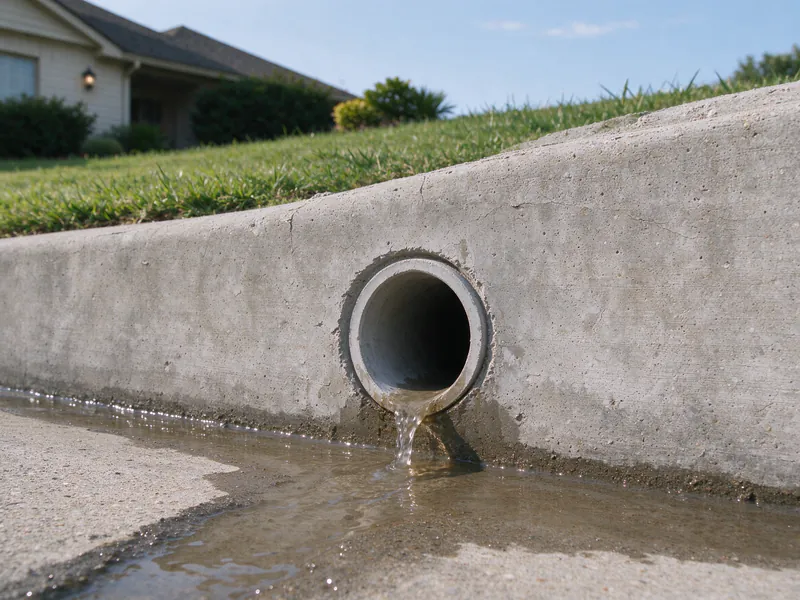
- The curb. On a lot with no fall, the street is usually the only legal destination. In Plano, work in the right-of-way needs the city’s Engineering Permit.
- An existing storm line, where one runs close and the city allows the connection.
- Never the neighbor’s lot, and never a dry well in clay. The guide on whether dry wells work in clay explains why they fill and stay full.
The guide to where yard drain water can go covers outlet rules across nearby cities.
Don’t pump into a French drain
A pump delivers water in bursts. Sent into a French drain, it fills the stone at once, and the trench leaks it back into the yard you were draining. Pump lines run in solid pipe to the outlet.
Keeping a pump ready
A pump that sits idle through a dry summer needs a check before the spring storms, not during one.
- Pour water into the basin until the pump cycles, and watch the outlet run.
- Clear the pump’s intake screen and scoop silt off the basin floor.
- Test the alarm and any battery backup.
- Keep the outlet free of clippings and leaves.
If the pump runs but the basin won’t empty, the check valve or the discharge line may be blocked, and drain repair and cleaning can trace it.
What a yard pump costs
Our typical range for a yard pump basin with its discharge line is $1,500 to $4,000 per pump basin. That covers the basin, the pump, the check valve and the buried discharge to the curb or an approved outlet; your written estimate sets the figure.
Basin size and depth, pump capacity, an alarm or backup, the length of the discharge and its outlet move the price. A new electrical circuit and the drains that feed the basin are priced separately.
- If you’re not sure the water needs a pump at all, standing water explains how we find the source.
- On a larger lot, the pump can be the outlet for a whole-yard drainage system.