
Planning a regrade in Rowlett?
When water runs back at the house, the cure is often moving soil: taking the high spots down and building the low ones up until the yard sheds water again.
Clay Plano Drainage Company regrades yards and builds swales and yard drains in Rowlett. The city treats that soil work as permitted work: its Development Engineering division asks for a grading permit when dirt is added, removed or moved on a lot.
The grading permit, in plain terms
Because regrading always shifts soil, it nearly always touches Rowlett’s grading permit. That’s not a reason to avoid it, just a step that belongs on the schedule.
| What the job does | What Rowlett asks | How we handle it |
|---|---|---|
| Adds, removes or shifts soil on the lot | Grading permit | Arranged as part of the job before the first cut |
| Works in city right-of-way, like a curb outlet | Right-of-way permit, $100 non-franchise fee, registration | Permit on the schedule, its fee as its own line |
| Shares a yard with pool equipment | Equipment kept out of swales and drainage flows | Route and pad planned together |
For a drain line that stays inside your lot and barely disturbs the ground, what applies is confirmed with the city for the address. The slope figures a Rowlett regrade has to meet are confirmed the same way.
Why the ground by the house matters
The first few feet around the slab do most of the work. If that ground falls away, roof water and rain move off toward the yard; if it has flattened or tipped back, water sits against the foundation and soaks in there.
Over the years that strip tends to rise. Each spring’s mulch, a raised bed, a border of edging stones or new sod laid on top of the old all lift it a little. A regrade takes it back down and gives the yard one continuous slope from the slab to the swale. What we look at before reshaping:
- Weep holes and brick ledges, so the new grade stays below them.
- Where each downspout lands, since a regrade holds up better once roof water has its own line.
- The swale it all drains into, which has to be lower still and falling to the street.
Pools and drainage swales
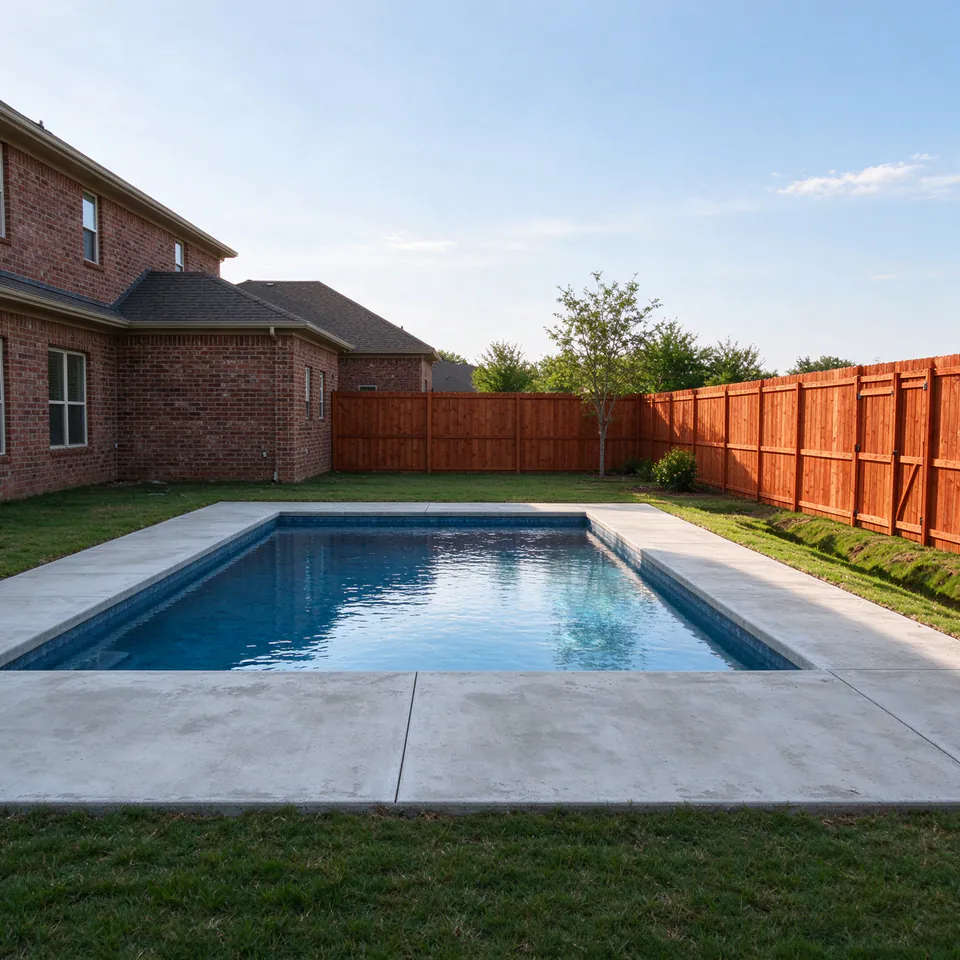
A new pool changes a yard’s drainage in several ways at once. The deck covers ground that used to soak up rain, the coping and fence change where water runs, and the equipment pad has to sit somewhere.
Rowlett’s pool permit requirements keep pool equipment out of drainage swales and designated drainage flows. On pool jobs the city also inspects curbs, sidewalks and irrigation in the right-of-way for damage. If you’re planning a pool:
- Mark the swale first, so the equipment pad and deck stay clear of it.
- Plan the deck drains to a basin and solid pipe rather than letting them spill onto the lawn.
- Keep the side yard open for the water from both lots.
If the pool is already in and water now stands beside it, a catch basin at the low point and a line toward the street can carry it away.
Near the lake, still draining to the street
Rowlett sits along the shores of Lake Ray Hubbard, with Lakeview Parkway (SH 66) and the George Bush Turnpike running through town. A lake nearby doesn’t change where a yard drain should go: on most lots, the street side.
Soil varies from lot to lot, so we test it rather than guess. A probe during the visit tells us how fast your ground drinks in rain, which settles whether regrading alone is enough or a French drain or basin has to carry the rest. Our outlet guide compares the places water can legally leave.
Side yards and neighbors
The strip between two Rowlett houses carries water from both lots. When beds, edging or a shed fill it, both yards hold water.
Side-yard drainage reopens that path, by reshaping the swale or by carrying water past an obstruction in solid pipe. If the lot above sends its runoff onto yours, our page on runoff from next door explains where Texas law stands. Around Rowlett, each city sets its own rules:
- Garland wants a neighbor’s written acceptance before a private storm line crosses their lot.
- Sachse requires a plot plan and permit for flatwork and grading in residential districts.
- Rockwall reviews new-home plats for no lot-to-lot drainage.
What to have ready for the visit
A little preparation makes the first visit more useful, and it helps us see the permit questions early.
- The address, plus the plat or a survey if you kept one from the closing.
- Photos or a short video taken while it rains, showing where water lands and where it stops.
- Pool or patio plans if either is coming, so the drainage and the new work fit together.
- Any earlier drain work, and where those lines end, even if you’re not sure they still flow.
How a Rowlett regrade comes together
The grade is the finished product, so most of the care goes into putting the yard back.
- Sod lifted in strips, kept moist, then laid back over the new slope.
- Soil on tarps and silt controls in place, so nothing washes into the gutter.
- A hose test across the finished grade and through any pipe while it is still open.
- Curb edge and sprinkler lines restored where the work met them.
- A final walk of the yard with you once it’s done.
The page on what happens during drainage installation shows the order of a typical day. Our regrading prices break down the drivers, and whole-yard drainage covers lots with water arriving from several sides.