
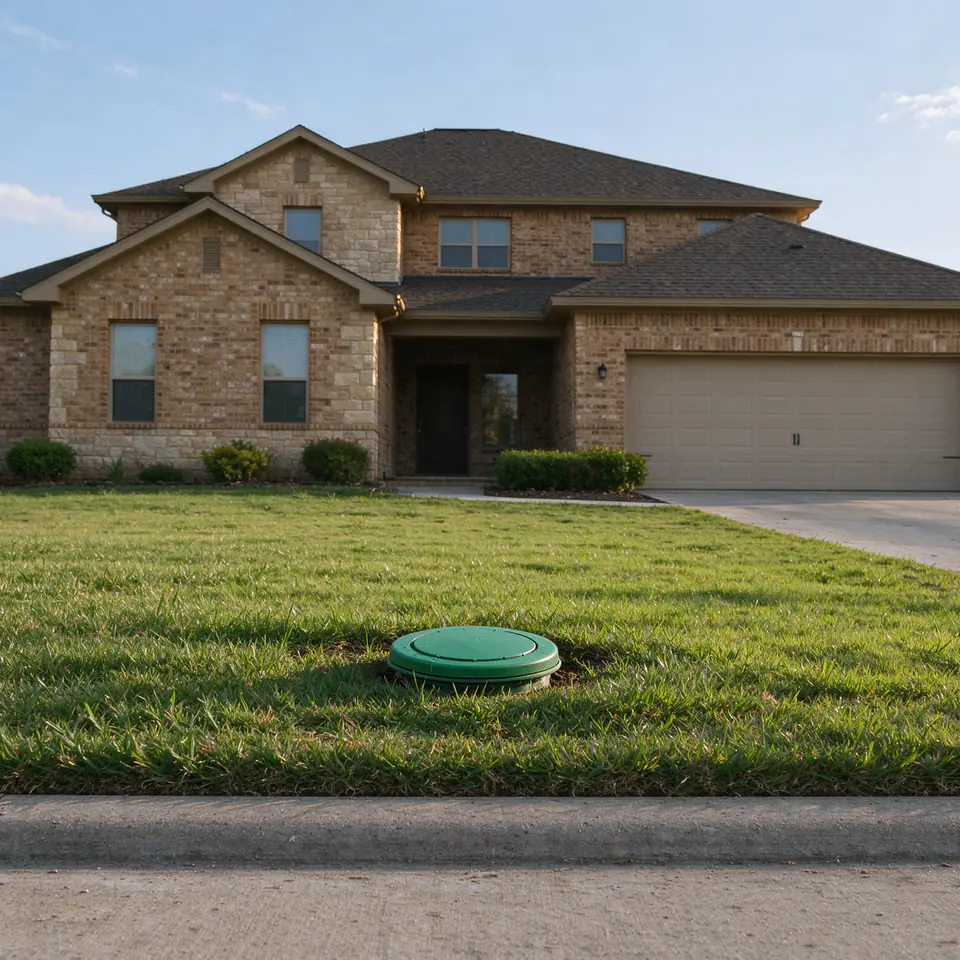
Water sitting in your Frisco yard?
When the side yard holds water after a storm, or the back lawn stays soft for days, the water has lost its way to the street. Clay Plano Drainage Company plans and installs yard drainage in Frisco: French drains, catch basins, downspout lines and regrading.
In Frisco the route matters twice. Any work in the city’s right-of-way or an easement needs a Public Works permit, so before we price a drain we check where your lot’s easements run and whether the outlet crosses the parkway.
Drains that cross an easement or the parkway
Frisco asks for a Public Works permit for any work in city right-of-way or easements. Its residential alteration requirements treat right-of-way work as a separate permit from anything else on the job.
That reaches further than the curb. Utility and drainage easements can run along side and back property lines, right where a yard drain often wants to go, and a line through one is work the city reviews.
| Where the drain route runs | What Frisco asks | What we do |
|---|---|---|
| Inside your lot, clear of easements | Confirmed for the address with the city | Confirm it before the dig is scheduled |
| Through an easement shown on the plat | Public Works permit | Read the plat first and put the permit on the schedule |
| Across the parkway to the curb | Public Works permit for right-of-way work | Plan the outlet so the permit is in place before any trench opens there |
| Permit fees | Set by the city, with a 6% technology fee on permits since August 1, 2026 | Show the permit as its own line in the written estimate |
Anyone working in Frisco’s right-of-way has to be registered with the city. We arrange the permit as part of the job, and the guide to drainage easements explains how to find yours on the plat.
Water stuck between the houses
The strip between two houses is a tight path: water there has to squeeze past fences, AC pads and beds on its way to the street. When the side swale loses its fall, water stops right where the obstruction starts.
We take elevations from the back corner to the front and find where the fall breaks. Where there is room, we reshape the swale; where a slab or bed can’t move, a basin picks up the water and solid pipe carries it past.
- Easement check. Side lot lines can carry an easement, and a line inside one needs the Public Works permit.
- Grading standards. Frisco’s own lot-grading figures are confirmed for your address before we set the new slope.
- Your neighbor’s side. The swale serves both lots, so we plan the work to keep it draining for both.
Side-yard drainage covers the method in detail.
Your HOA may want a say too
Some Frisco subdivisions need HOA approval for exterior work, and that review is separate from any city permit. A drain the city has permitted can still wait on an architectural committee.
If your neighborhood has an HOA, check its guidelines before the work is scheduled. Our written estimate shows the route, the outlet, each basin and grate, and what gets restored, which gives you what to describe on the form.
Rock in the trench: central Frisco’s chalk
Dig in central Frisco and you may hit chalk. The soil there is mostly Stephen silty clay on gentle 1 to 4 percent slopes, and it sits shallow over chalk.
For a French drain, that changes the digging more than the idea. Rock inside trench depth means slower work and sometimes a shallower route that still keeps its fall. The site visit looks for signs of chalk, and the written estimate says how rock is handled.
Stonebriar sits on deep, heavy clay
Stonebriar is a different story. It is mapped as Houston Black, the same heavy clay that lies under most of Plano, which soaks up water very slowly and swells when it gets wet.
There a French drain needs a larger stone zone, fabric to keep clay fines out and a sure outlet, because the soil around the pipe won’t take the water. The guide to French drains in clay soil explains the design.
- Slab edges. Clay that stays wet along one side of a slab and dry along another moves unevenly, so we pipe downspouts away from the foundation first.
Where Frisco water can go
The outlet is the first thing we plan. Water collected in your yard has to leave without landing on a neighbor, and Texas Water Code section 11.086 bars diverting or impounding natural surface flow in a way that damages another property.
That usually means an outlet on the street side of the lot:
- A pop-up emitter in open lawn, which opens when water flows and closes after.
- A line to the curb, which is right-of-way work in Frisco and goes through the Public Works permit.
The guide to where yard drain water can go compares the options, and water from a neighbor’s yard covers runoff between lots.
The rules change at the city line
Frisco reaches from the SH 121 corridor in the south up to US 380, with the Dallas North Tollway and Preston Road running up through it, and the cities around it each write their own drainage rules.
- Prosper needs a right-of-way permit to core a curb for a drain, and allows one core per lot, no wider than 3 inches.
- The Colony allows no lot-to-lot drainage unless a drainage easement exists or is dedicated through every property the water crosses.
- Allen lets a concrete slab reach no more than 1 foot into the side swale.
- Plano designs house lots to drain to the street and does not permit lot-to-lot drainage.
How we approach a Frisco yard
We plan the route before the pipe. In a city where easements and the parkway bring a permit into the job, that order keeps the permit from turning up after the price.
- Plat first. We look at the recorded plat for easements, so the route and the permits it needs are known before the price.
- Source before drain. Roof water, a higher lot next door, sprinkler zones and wet clay each need a different collector.
- Fall measured. We measure the fall from the wet area to the outlet, because a line without steady fall holds water.
- Tested before backfill. We run water through the system and fix any low spot while the trench is open.
- Ground put back. Sod goes back in its strips, crossed sprinkler lines are repaired, and we walk you through the route at the end.
The work itself is what we do across the area: catch basins for low spots, side-yard drainage for the strip between houses, yard regrading where the ground tilts toward the slab, and whole-yard systems where water arrives from several directions.
When to look at your yard
Rain normals for nearby Plano peak in May and October, at about 5 inches in each month. A spring or fall storm is a good time to see where your water goes.
Take a short video while it rains: where water leaves the downspouts, where it crosses the lawn and where it stops. That video, the address and any survey or plat you have are enough for us to plan the visit. The cost estimator gives you a first range before we come out.